
The short answer
Measure the helm first, then buy the largest screen that fits and is bright enough for your cockpit. Choose the maker whose radar, autopilot and sonar you want, because those connect best within one family.
- Measure flush-mount or bracket space before anything else
- Brightness in nits matters more than size in an open cockpit
- Touchscreens are fast at rest; keypads work better in a seaway
- The display brand decides your radar, autopilot and sonar options
What each size costs
| Screen | Displays we cover | Observed price range |
|---|---|---|
| 7 in | 3 | $769–$1,000 |
| 9 in | 4 | $1,099–$3,599 |
| 10 in | 3 | $2,599–$3,199 |
| 12 in | 7 | $2,499–$5,998 |
| 15 in | 1 | $3,399 |
| 16 in | 6 | $5,499–$6,999 |
| 19 in | 1 | $7,199 |
| 22 in | 1 | $9,999 |
| 24 in | 1 | $9,199 |
Brightness and readability
Screens rated around 1,000 nits and above remain readable in direct sun; many displays we cover publish 1,200 nits. Polarised sunglasses and viewing angle also matter — check the display from the helm position.
Build the system around it
NMEA 2000 carries engine, heading and wind data across brands, but radar, sonar modules and autopilot computers usually connect over the maker's own network. Simrad and B&G share Navico's ecosystem; choose the family first.
Products referenced in this guide
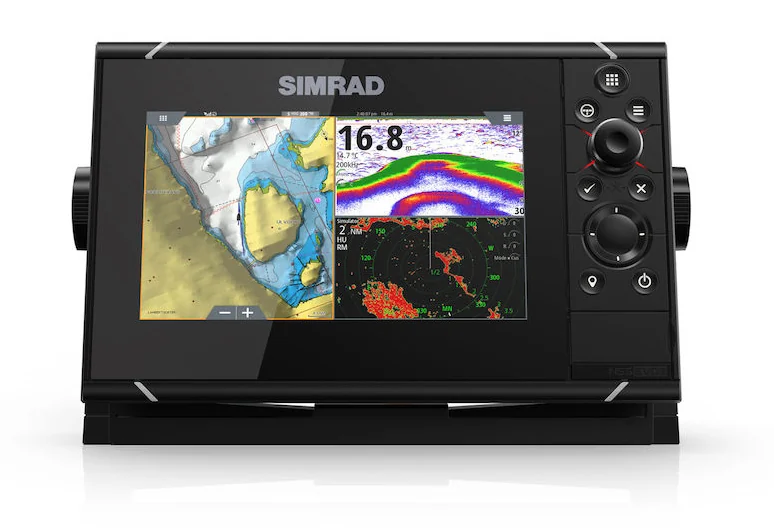
Simrad NSS7 evo3 With Insight ChartsSimrad's earlier NSS evo3 multifunction display, still listed in stock. This listing includes Insight Charts. The maker lists a 7-inch...
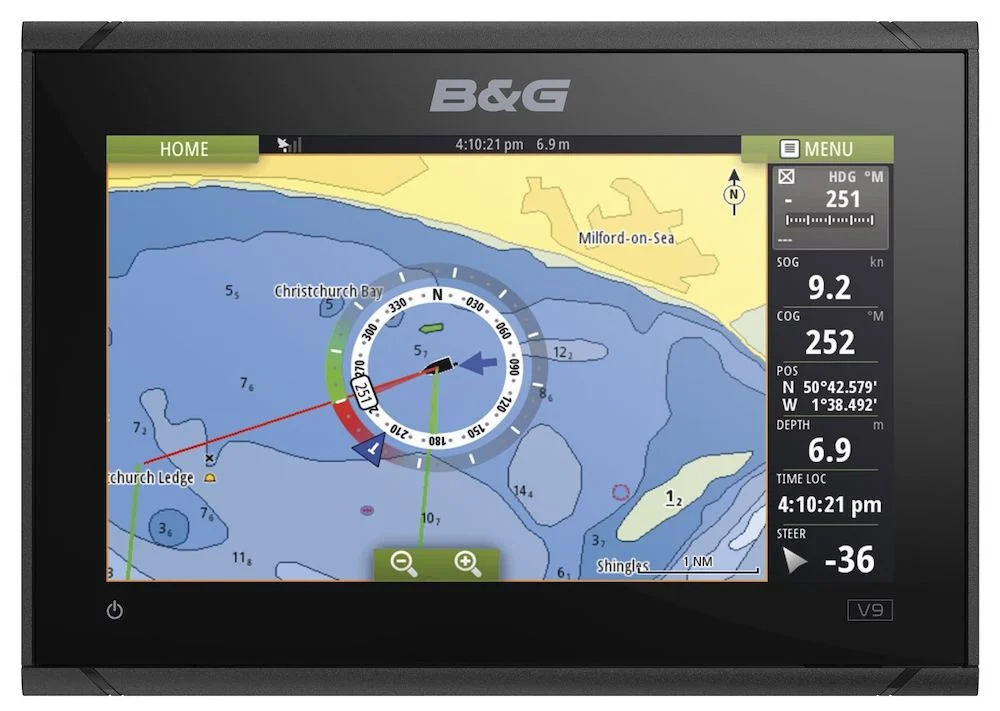
B&G Vulcan 9B&G's Vulcan sailing chartplotter, the entry point to the B&G display range. The maker lists a 9-inch screen at 800x480, rated 1200 nits.
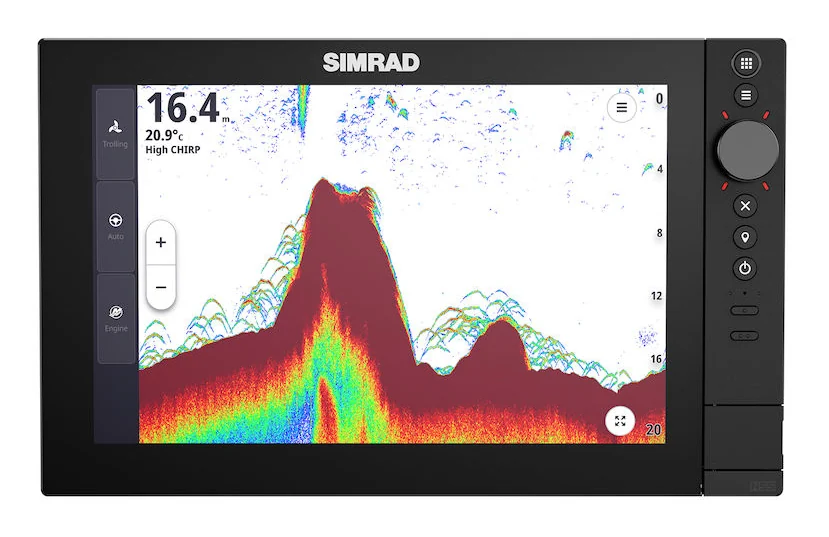
Simrad NSS 4 - 12" Chartplotter and Fishfinder with C-MAP DISCOVER X ChartSimrad's fourth-generation NSS multifunction display. This listing includes C-MAP DISCOVER X Chart. The maker lists a 12-inch screen at...
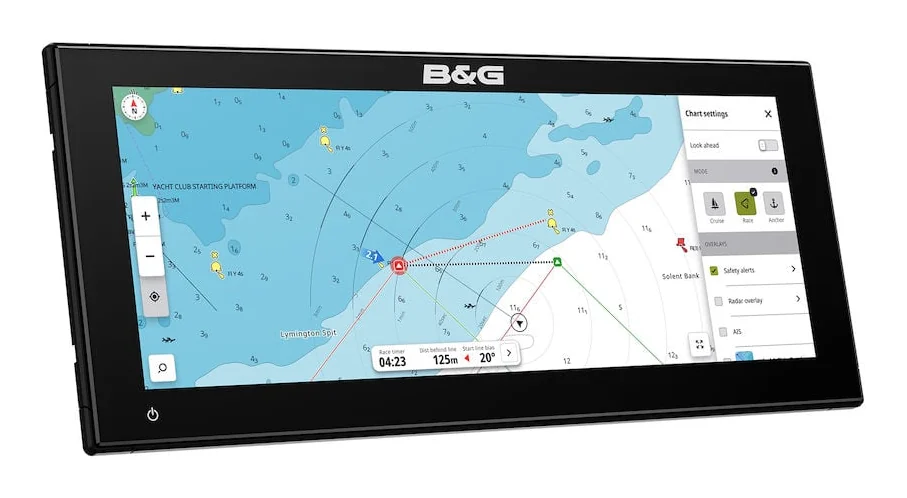
B&G Zeus S 3012 UltrawideB&G's Zeus S sailing chartplotter. The maker lists a 12-inch screen at 1920 x 720 px, rated >1000 nits.
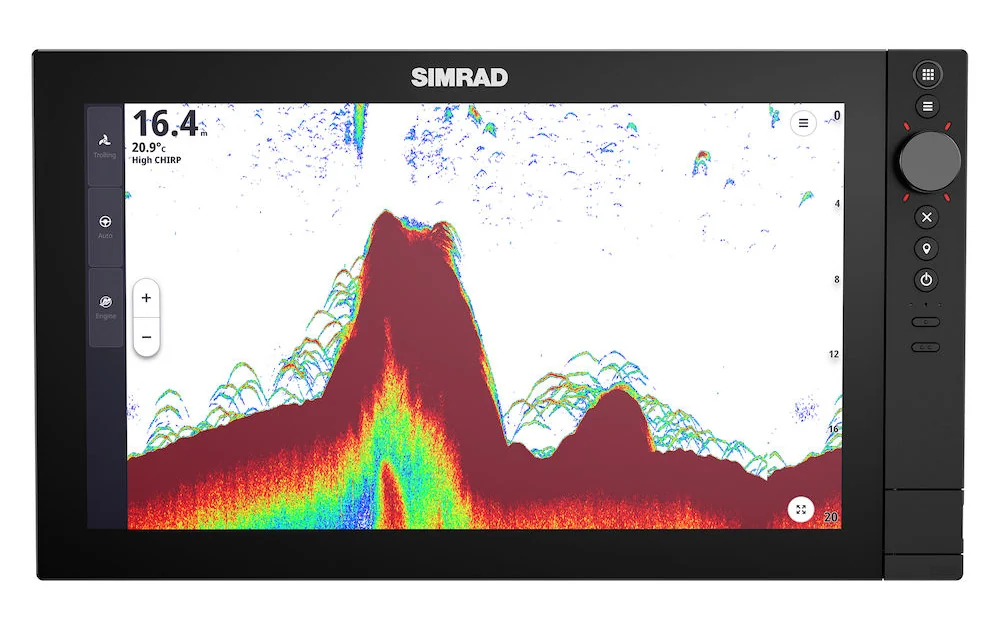
Simrad NSS 4 - 16" Chartplotter and Fishfinder with C-MAP DISCOVER X ChartSimrad's fourth-generation NSS multifunction display. This listing includes C-MAP DISCOVER X Chart. The maker lists a 16-inch screen at...
Sources
- Simrad — Simrad NSS7 evo3 With Insight Charts — product page and specifications Retrieved 24 Sep 2026
- B&G — B&G Vulcan 9 — product page and specifications Retrieved 24 Sep 2026
- Simrad — Simrad NSS 4 - 12" Chartplotter and Fishfinder with C-MAP DISCOVER X Chart — product page and specifications Retrieved 24 Sep 2026
- B&G — B&G Zeus S 3012 Ultrawide — product page and specifications Retrieved 24 Sep 2026
- Simrad — Simrad NSS 4 - 16" Chartplotter and Fishfinder with C-MAP DISCOVER X Chart — product page and specifications Retrieved 24 Sep 2026