
A lithium bank accepts current so readily that it can overload a standard alternator. A DC-DC charger limits and profiles the charge: size it to about 30–50% of the alternator's rated output, and remember it draws more from the start battery than it delivers to the house bank.
- Charger output ≈ 30–50% of alternator rating for continuous use
- Input current ≈ output × 1.15 (conversion losses)
- Fuse and cable for the input current, over the full run
- Choose a unit with a lithium profile and engine-run detection
Why lithium needs it
Lead-acid batteries throttle their own charge current as they fill; LiFePO4 keeps accepting close to its maximum almost to full. Connected directly, a large lithium bank can hold a small marine alternator at full output for an hour or more — long enough to overheat it. A DC-DC charger caps the current and applies the correct absorption voltage.
Size it against the alternator
Most outboard and small inboard alternators are rated 40–90 A. A 30 A DC-DC charger suits a 70–90 A alternator; larger alternators, or two chargers in parallel, for bigger banks.
| Charger | Rated output | Approx. input draw |
|---|---|---|
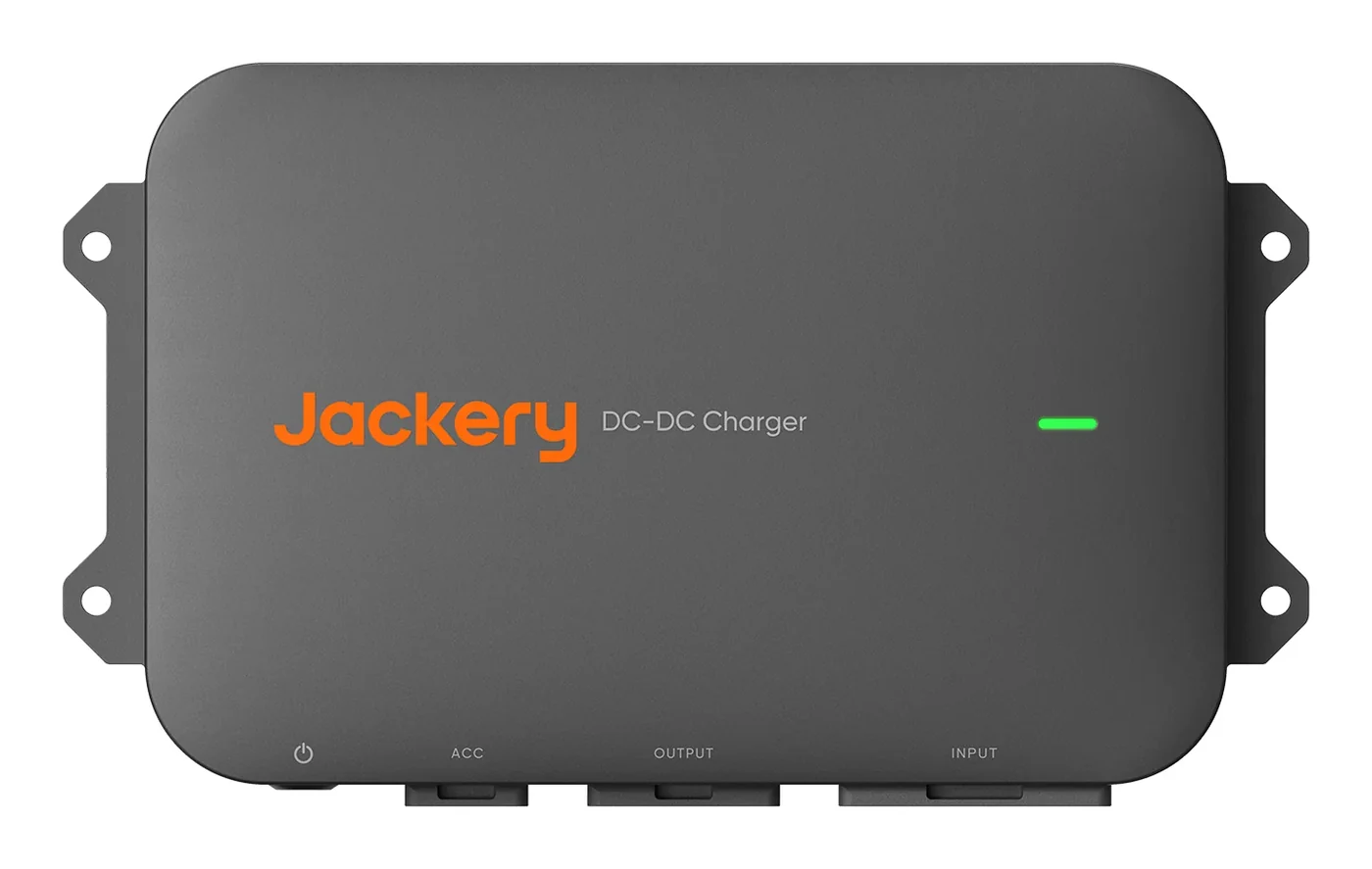
| Jackery DC-DC Alternator Charger | 12 A | ≈ 14 A |
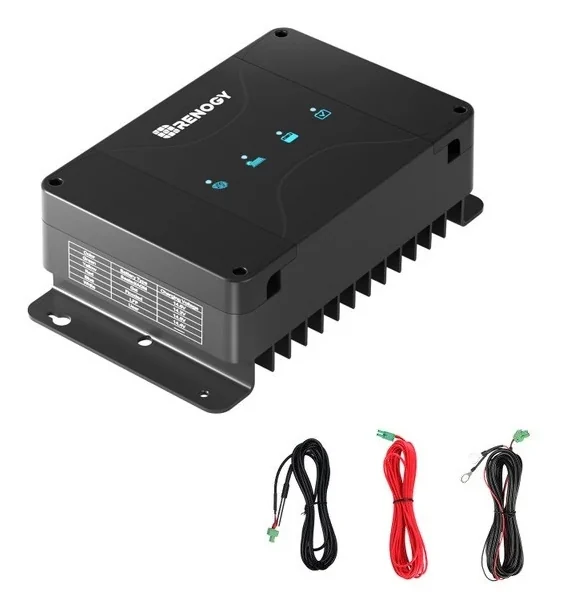
| Renogy DCC30S 12V 30A DC-DC Charger with MPPT | 30 A | ≈ 34 A |
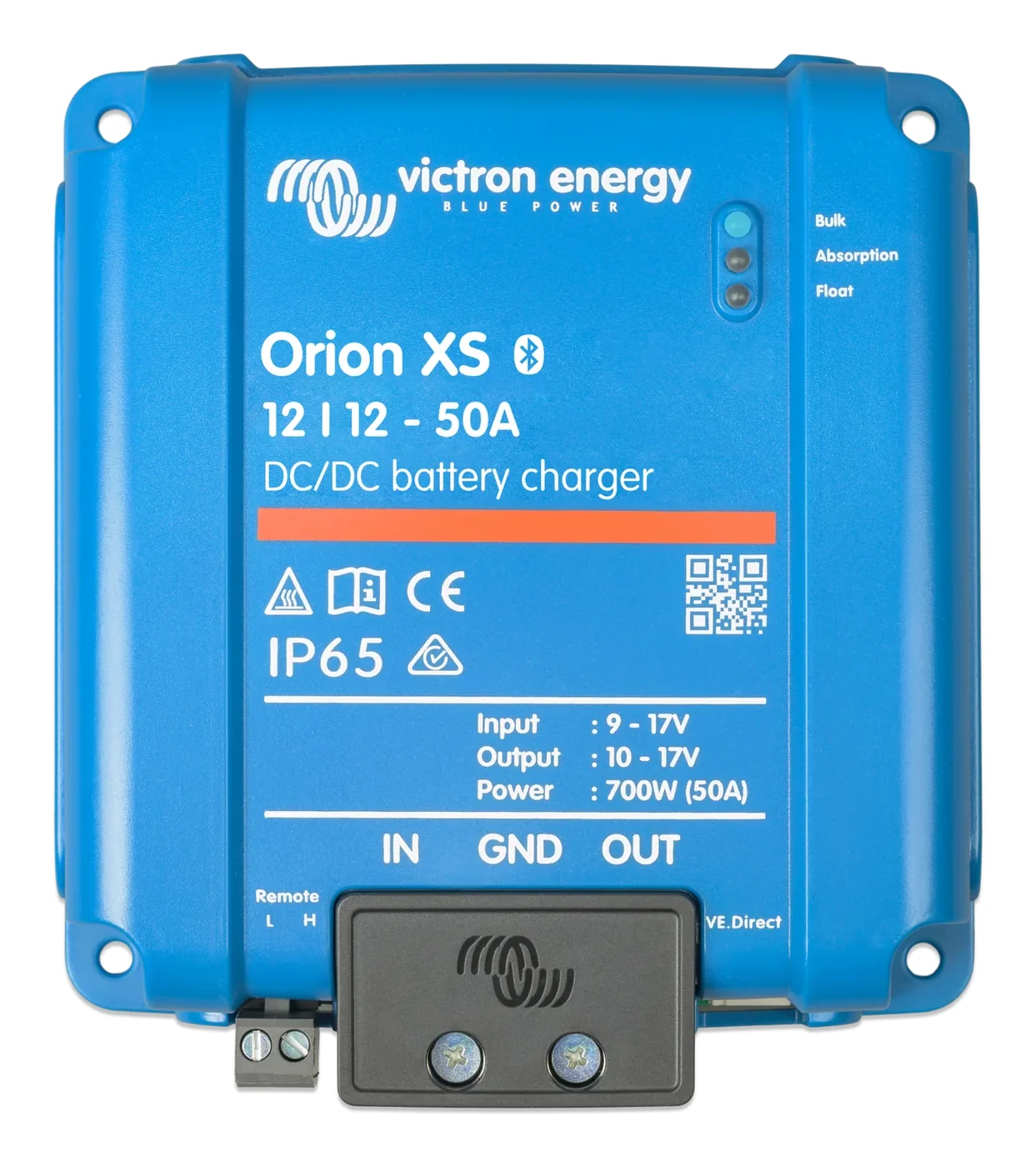
| Victron Energy Orion XS 12/12-50A DC-DC Charger | 50 A | ≈ 57 A |
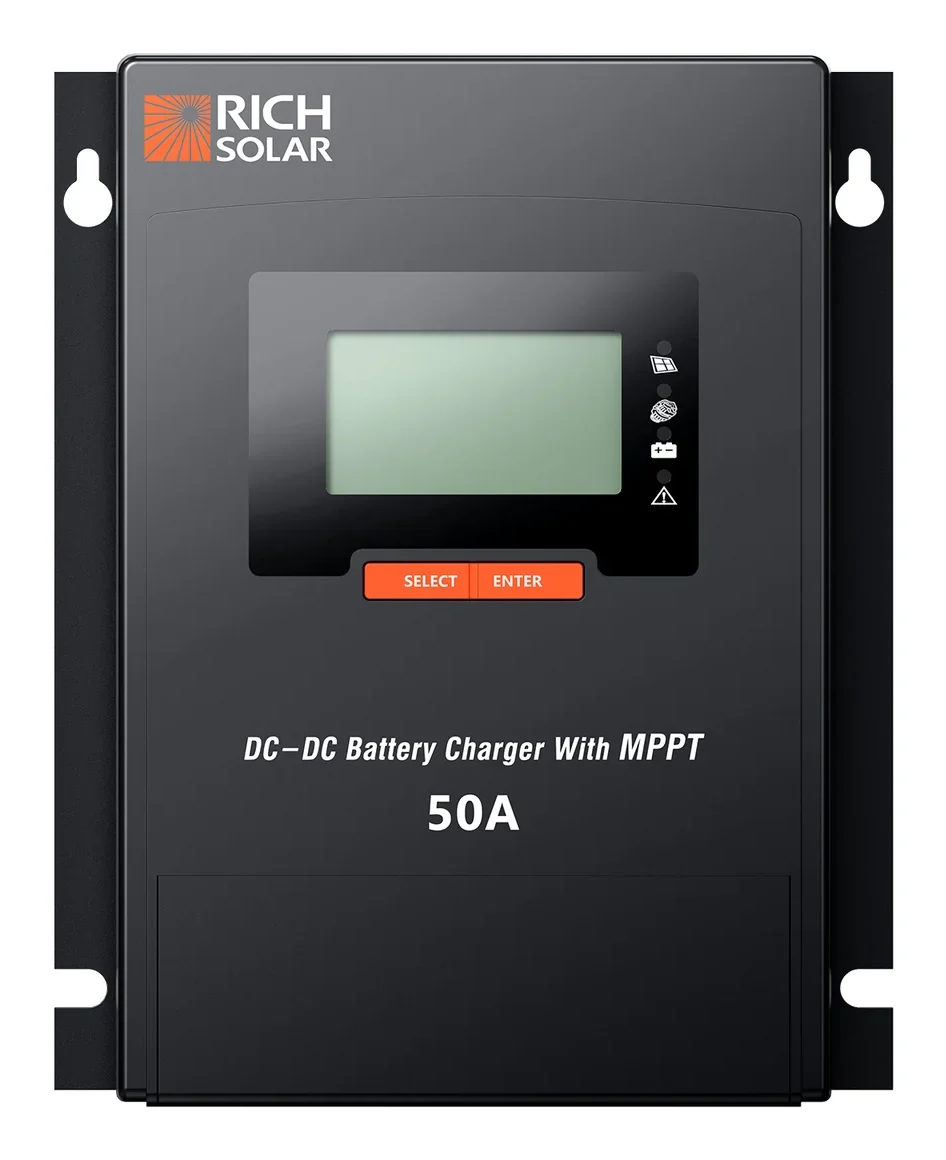
| Rich Solar BRAVO 50 DC | 50 A | ≈ 57 A |
| Renogy REGO 12V 60A DC-DC Charger | 60 A | ≈ 69 A |
Install for the input current
Cable and fuse the input side for the input current — higher than the rated output — and keep the run short. Many chargers need an ignition or engine-run signal so they only charge when the alternator is turning.
Products referenced in this guide
Sources
- Jackery — Jackery DC-DC Alternator Charger — product page and specifications Retrieved 24 Sep 2026
- Renogy — Renogy DCC30S 12V 30A DC-DC Charger with MPPT — product page and specifications Retrieved 23 Sep 2026
- Victron Energy — Victron Energy Orion XS 12/12-50A DC-DC Charger — product page and specifications Retrieved 23 Sep 2026
- Rich Solar — Rich Solar BRAVO 50 DC — product page and specifications Retrieved 24 Sep 2026