
Count one channel per speaker (or a mono channel per subwoofer), match each channel's RMS output to the speakers at the same impedance, then estimate current draw: total RMS output ÷ 12 V ÷ efficiency. A class-D amplifier delivering 1,000 W RMS draws roughly 100 A from a 12 V system at full output.
- 4 channels = two speaker pairs; 6 or 8 add towers; mono = subwoofer
- Match RMS per channel to speaker RMS at the same impedance
- Current ≈ total RMS ÷ 12.6 V ÷ 0.8 (class-D efficiency)
- Fuse within 7 in (18 cm) of the battery and size cable for the current (ABYC E-11)
How many channels
Amplifier channels drive one speaker each. A common wake-boat layout is four channels for two pairs of in-boat speakers, two more for the towers, and a mono channel for the subwoofer. Across the amplifiers we cover:
| Channels | Models | RMS power published | Brands |
|---|---|---|---|
| 1 (mono) | 5 | 150–1,000 W RMS (as listed) | DS18, Wet Sounds |
| 2 (speaker pairs: 1) | 4 | 200–1,000 W RMS (as listed) | Aquatic AV, DS18 |
| 3 (speaker pairs: 1) | 1 | 600 W RMS (as listed) | Aquatic AV |
| 4 (speaker pairs: 2) | 14 | 40–760 W RMS (as listed) | Aquatic AV, DS18, Wet Sounds |
| 5 (speaker pairs: 2) | 2 | 600–1,000 W RMS (as listed) | DS18 |
| 6 (speaker pairs: 3) | 4 | 85–185 W RMS (as listed) | DS18, Wet Sounds |
| 8 (speaker pairs: 4) | 2 | 85–150 W RMS (as listed) | DS18, Wet Sounds |
Estimate the current draw
At full output a class-D amplifier is roughly 80% efficient, so input current ≈ total RMS watts ÷ 12.6 V ÷ 0.8. That is about 10 A per 100 W RMS. Music averages far below full output, but the cable and fuse must handle the peak. Large systems on wake boats often add a dedicated audio battery with an isolator or DC-DC charger.
Wiring it safely
Run positive and negative cables sized for the current and the round-trip length, put a fuse or breaker close to the battery, and ground to the battery negative or DC negative bus — not to the hull or an engine block.
Products referenced in this guide
Sources
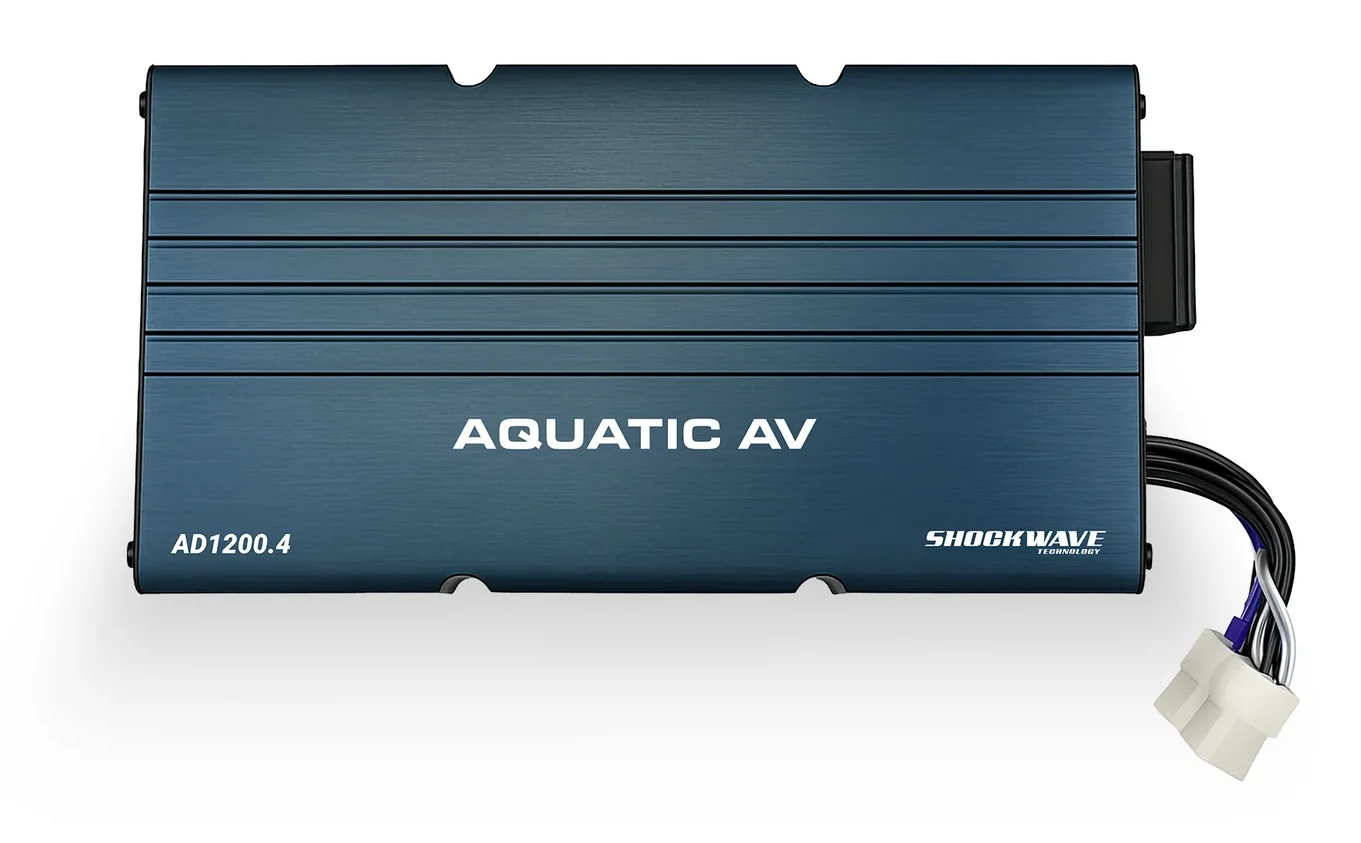
- Aquatic AV — Aquatic AV AD1200.4 4-Channel Amplifier — product page and specifications Retrieved 25 Sep 2026
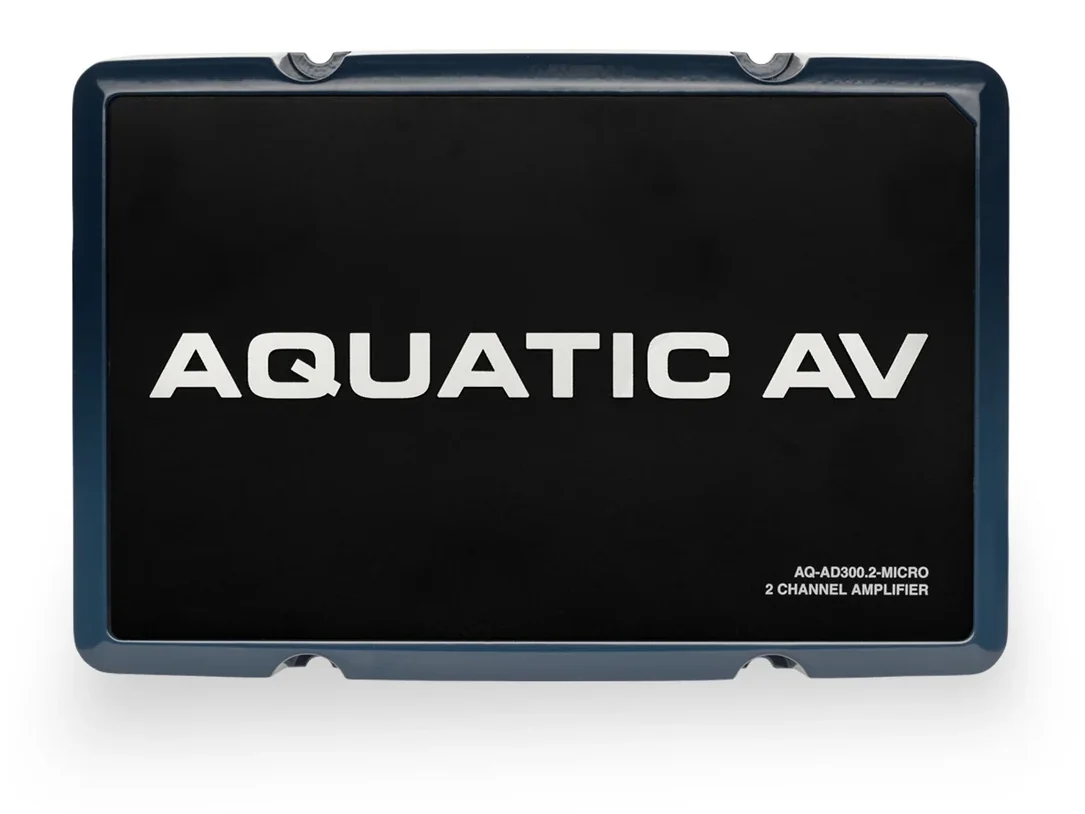
- Aquatic AV — Aquatic AV AD300.2 Micro 2-Channel Amplifier — product page and specifications Retrieved 25 Sep 2026
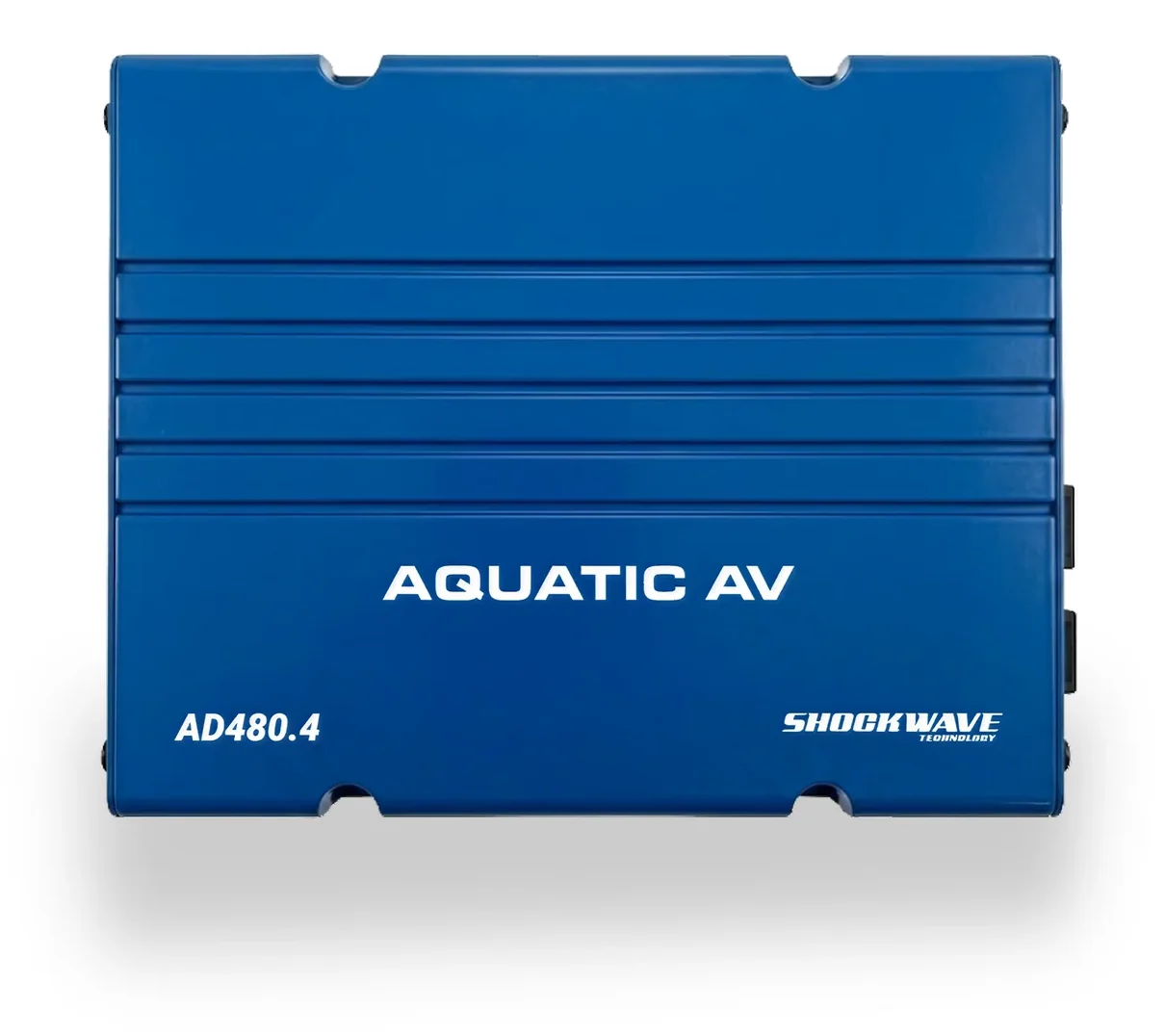
- Aquatic AV — Aquatic AV AD480.4 4-Channel Amplifier — product page and specifications Retrieved 25 Sep 2026
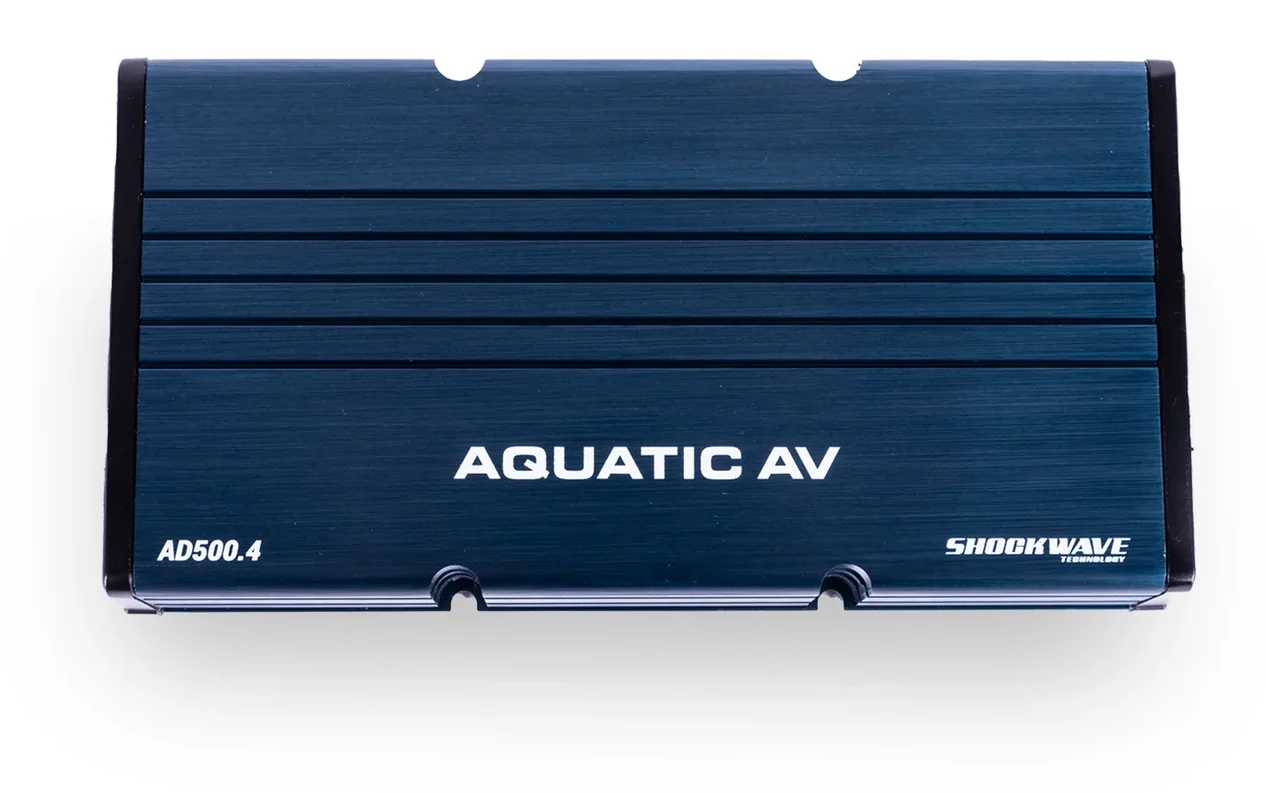
- Aquatic AV — Aquatic AV AD500.4 4-Channel Amplifier — product page and specifications Retrieved 25 Sep 2026
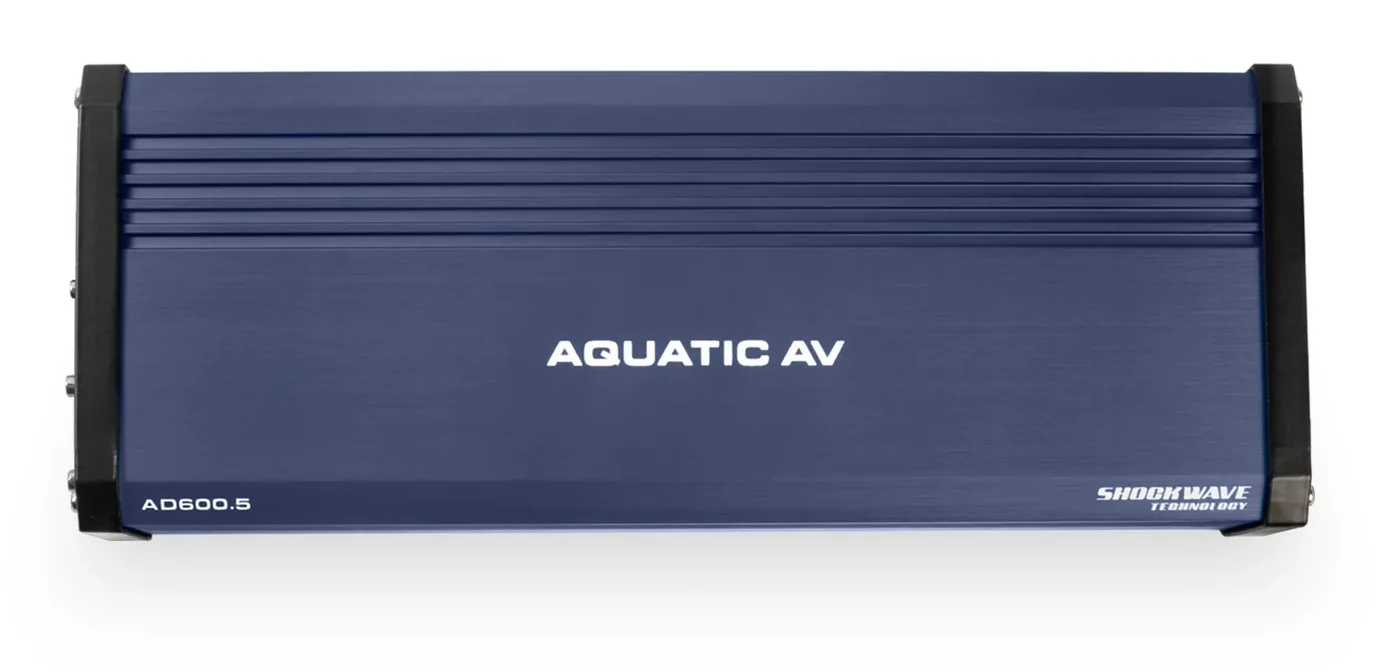
- Aquatic AV — Aquatic AV AD600.5 5/4/3-Channel Amplifier — product page and specifications Retrieved 25 Sep 2026
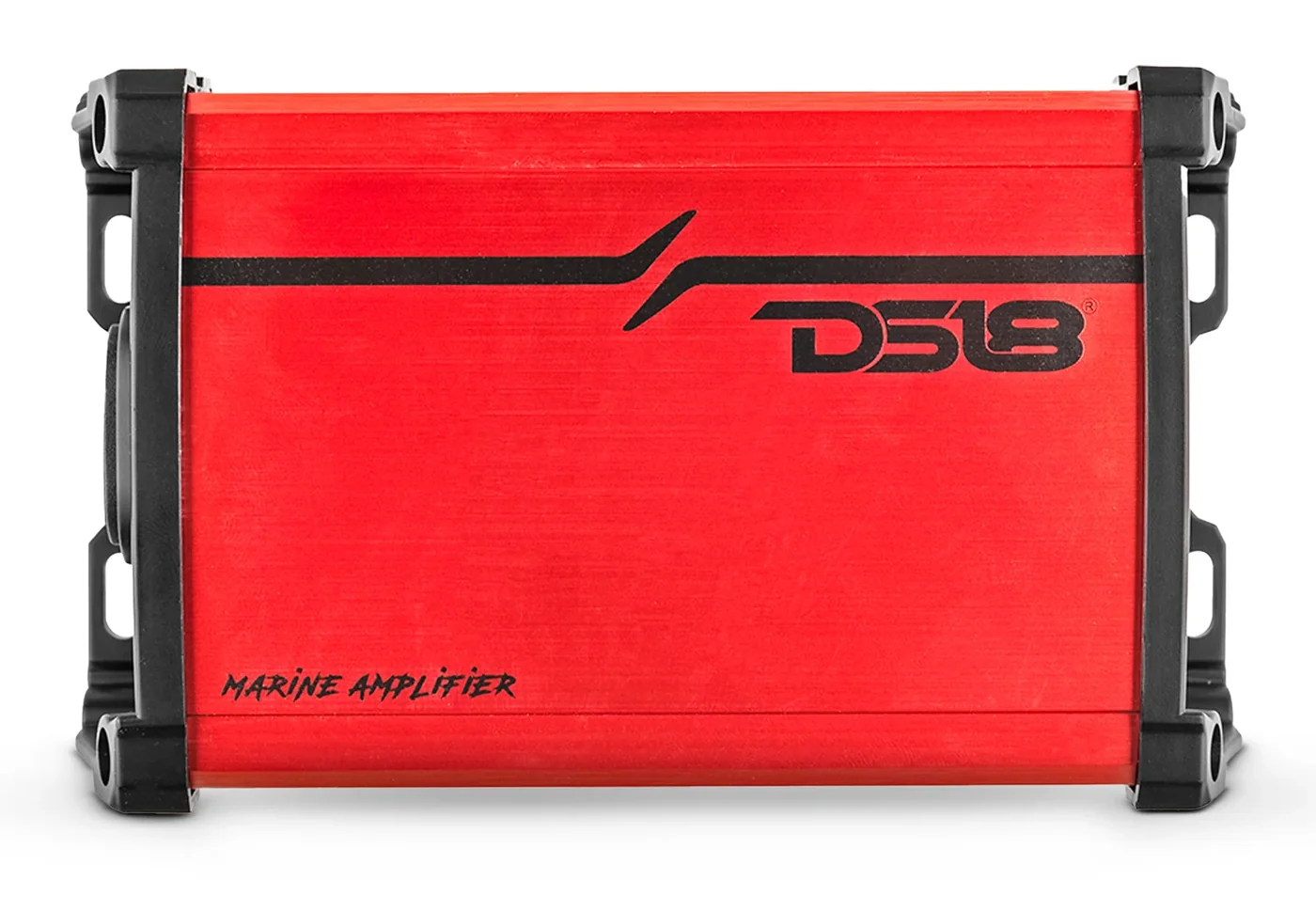
- DS18 — DS18 MP.4A MP 4-Channel Amplifier — product page and specifications Retrieved 25 Sep 2026