Count the batteries you charge from shore — trolling string plus cranking battery — and buy a charger with at least that many banks. Then choose amps per bank for your overnight window: roughly battery Ah ÷ hours available.
- Banks = number of separate batteries charged
- Amps per bank ≈ battery Ah ÷ hours to recharge (lithium accepts it; check lead-acid limits)
- Each bank must offer the right chemistry profile for its battery
- Waterproof, sealed units belong in the bilge-adjacent lockers they live in
Why banks matter
A multi-bank charger charges each battery in a series string separately, so a 36 V trolling system of three 12 V batteries needs three banks — plus one more for the cranking battery if it shares the charger.
How many amps
Divide capacity by the hours you have: a 100 Ah battery over an 8-hour night needs about 12–15 A per bank; 10 A banks suit batteries up to about 80–100 Ah charged overnight. Lithium can be charged faster; lead-acid manufacturers usually cap charge current at a fraction of capacity.
Match the chemistry
LiFePO4 needs a lithium profile; AGM, gel and flooded batteries need their own. Chargers that let you set each bank separately handle a lithium trolling string with a lead-acid cranking battery.
Products referenced in this guide
Sources
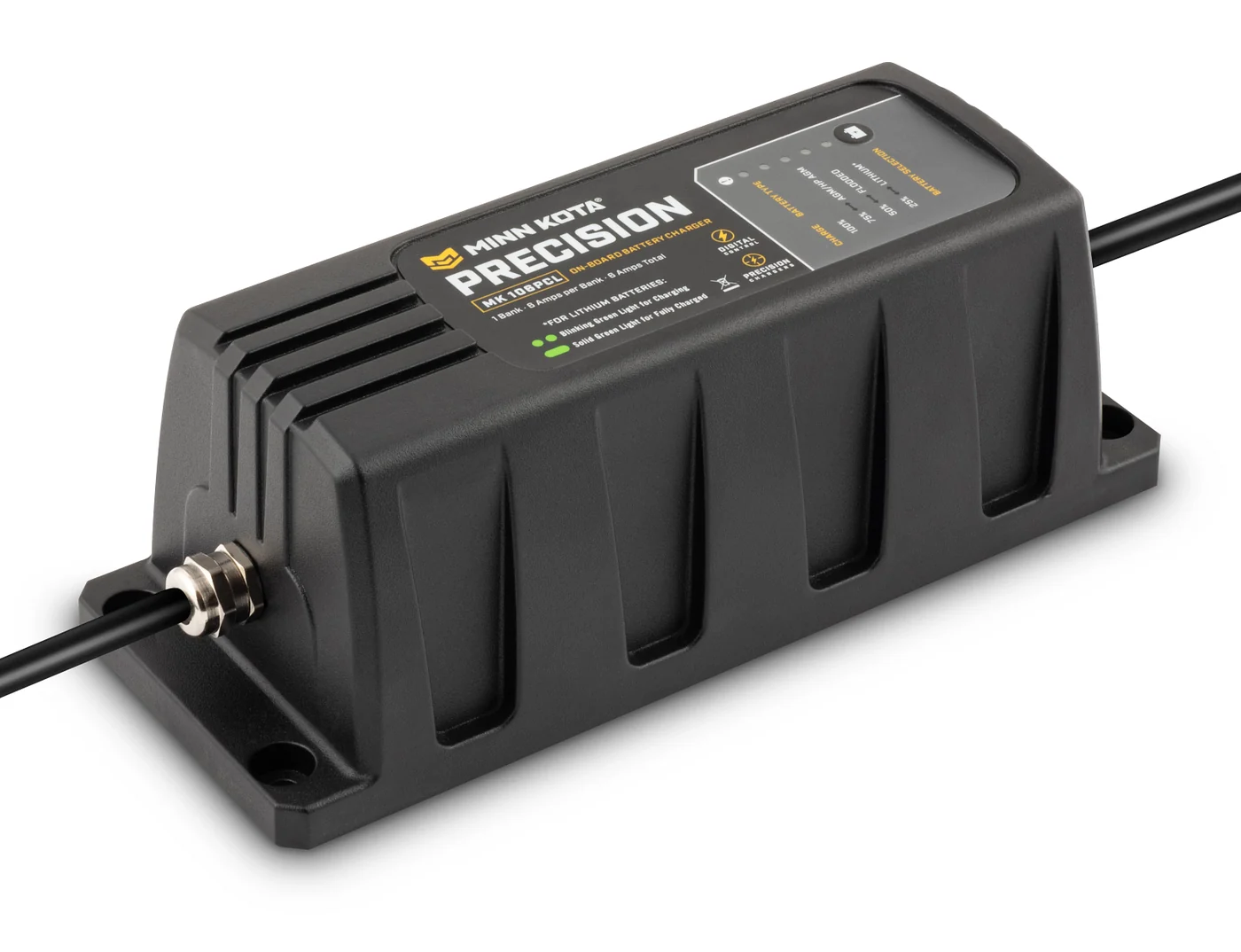
- Minn Kota — Minn Kota MK 106 PCL On-Board Charger (1 × 6 A) — product page and specifications Retrieved 23 Sep 2026
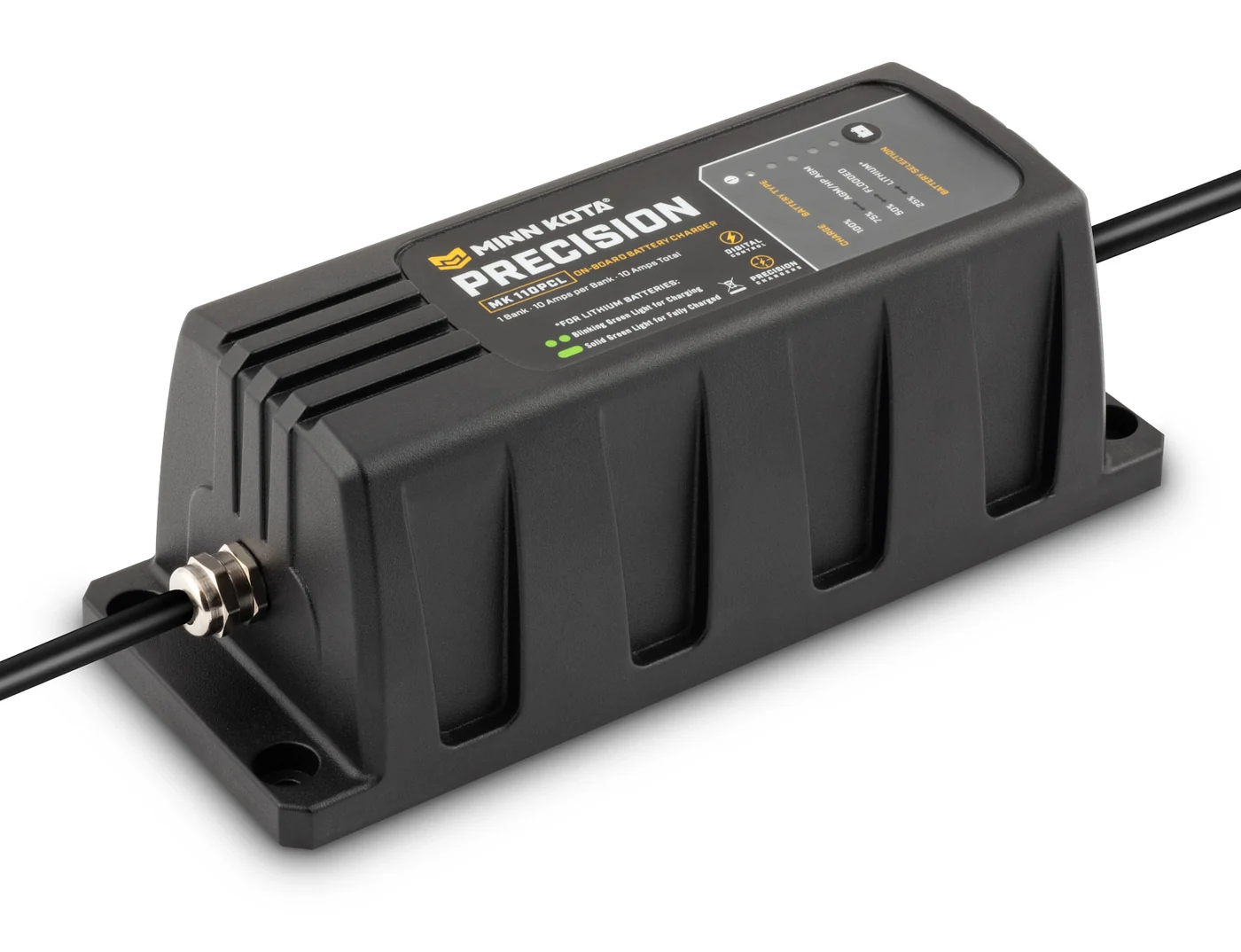
- Minn Kota — Minn Kota MK 110 PCL On-Board Charger (1 × 10 A) — product page and specifications Retrieved 23 Sep 2026
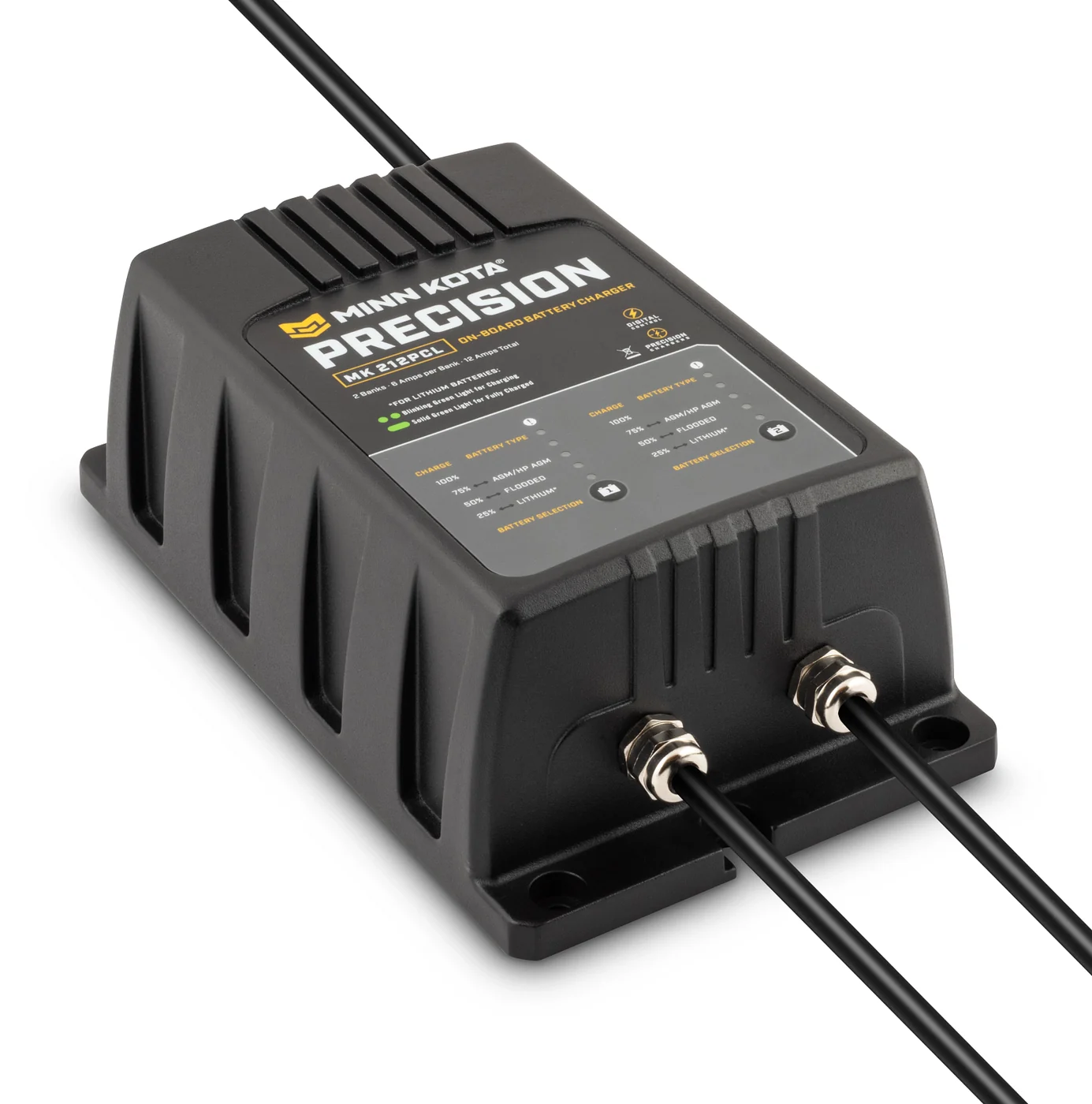
- Minn Kota — Minn Kota MK 212 PCL On-Board Charger (2 × 6 A) — product page and specifications Retrieved 23 Sep 2026
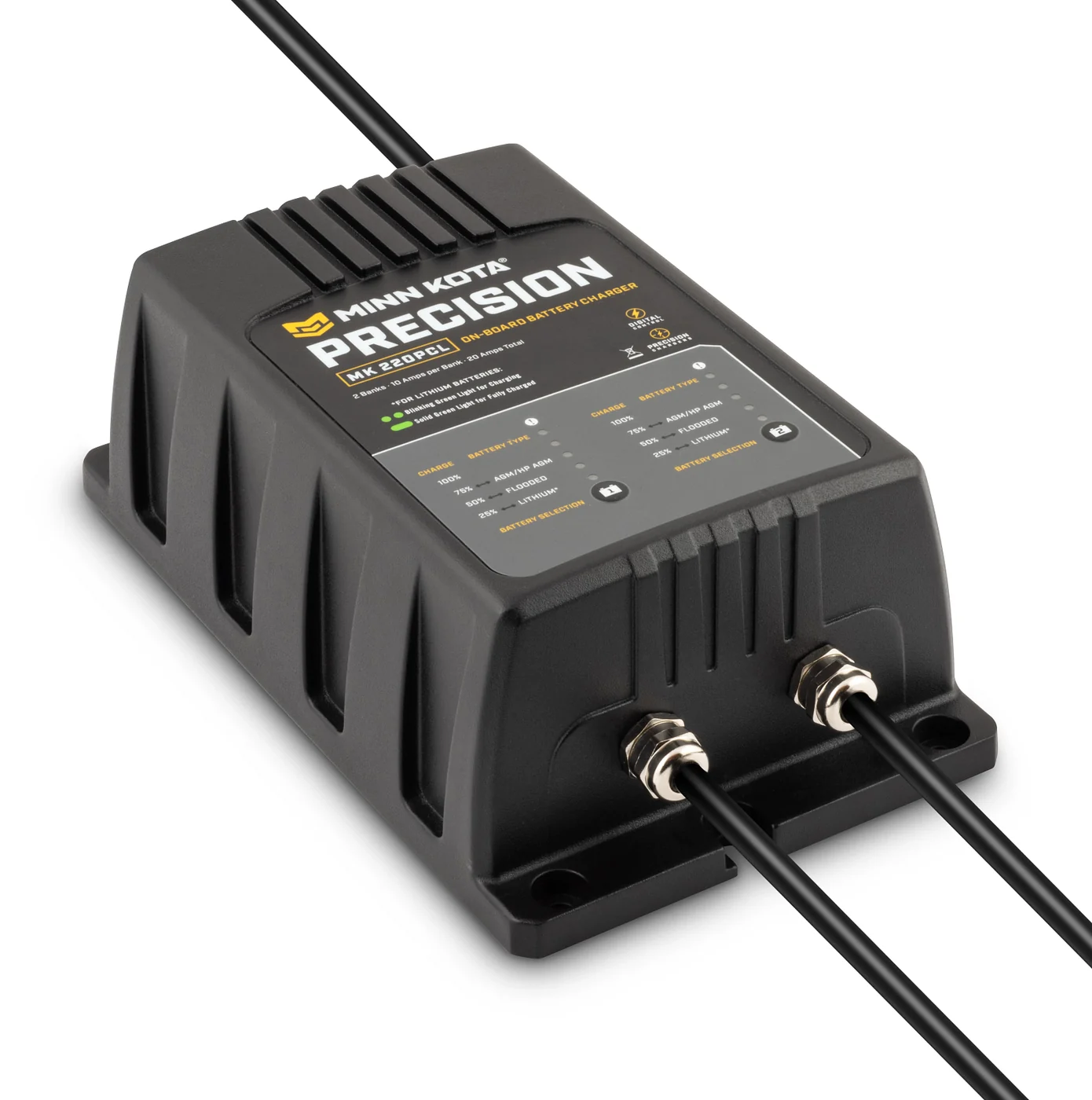
- Minn Kota — Minn Kota MK 220 PCL On-Board Charger (2 × 10 A) — product page and specifications Retrieved 23 Sep 2026