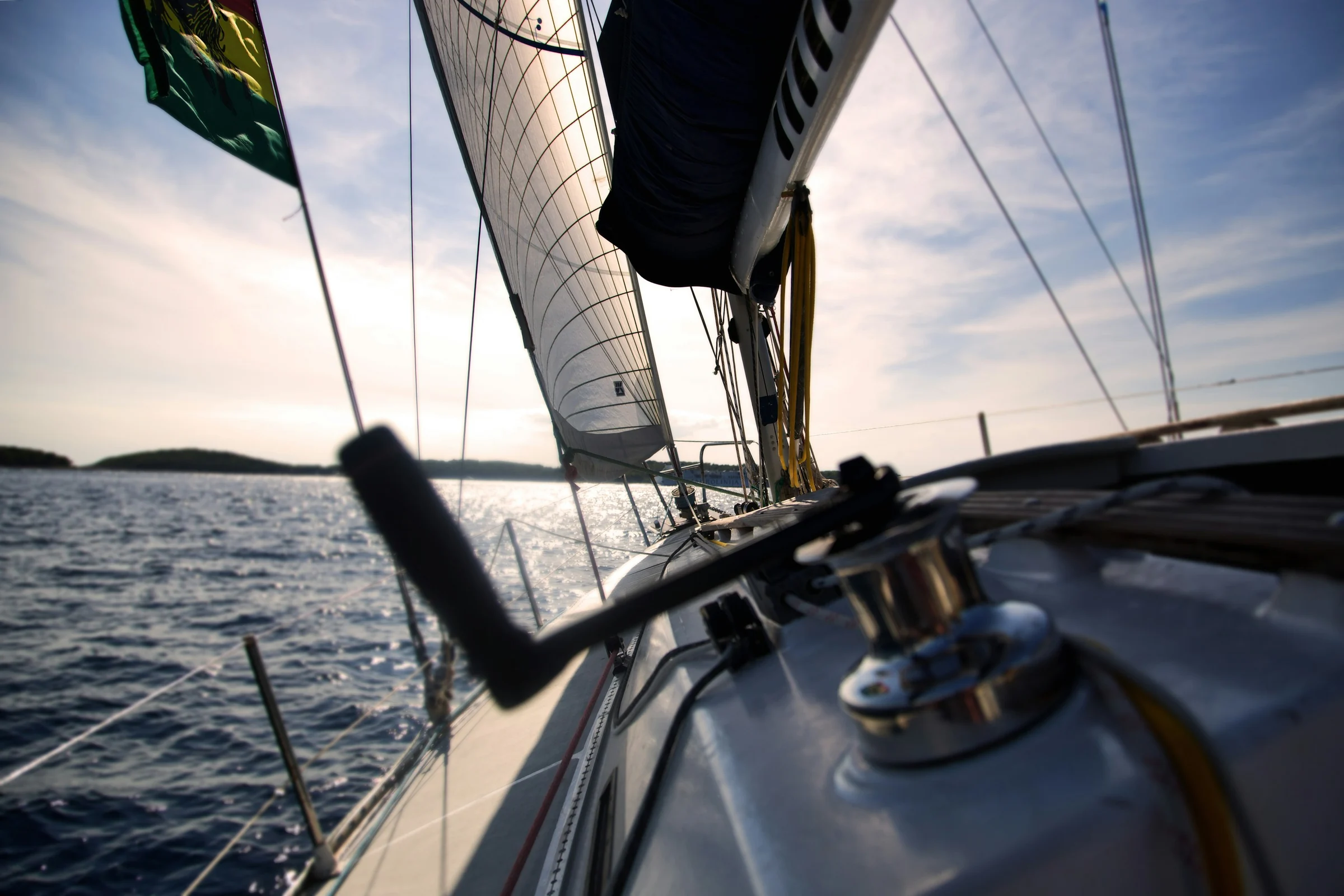
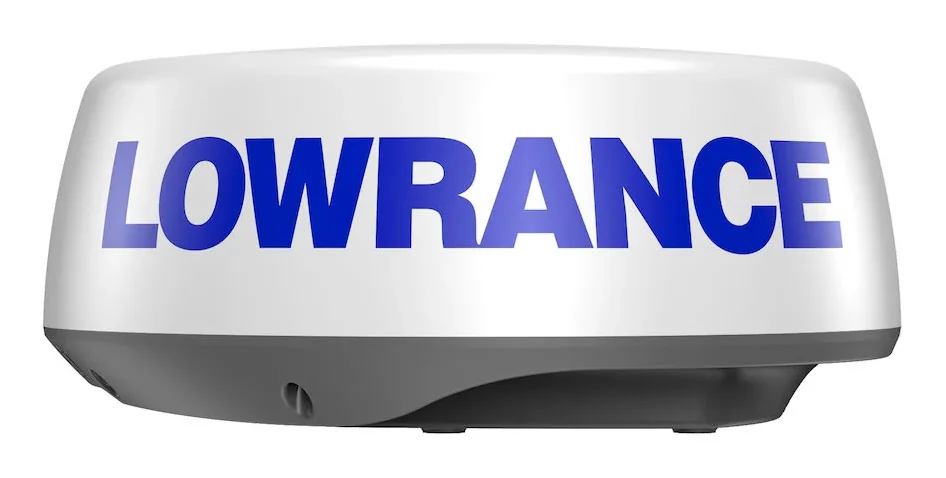
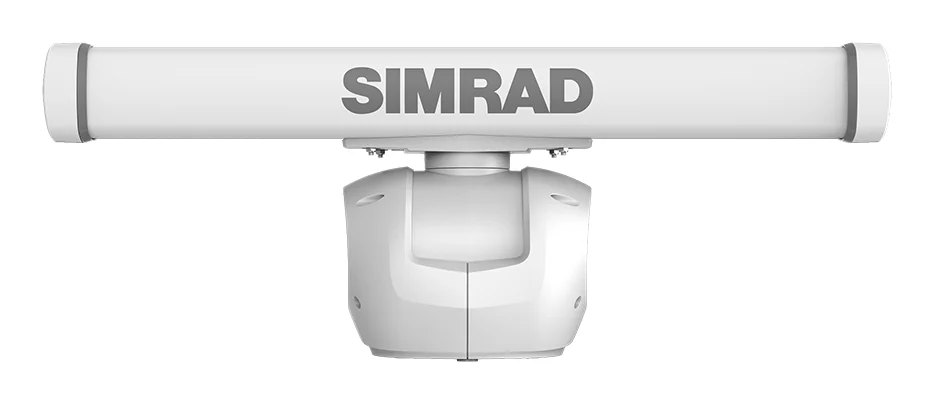
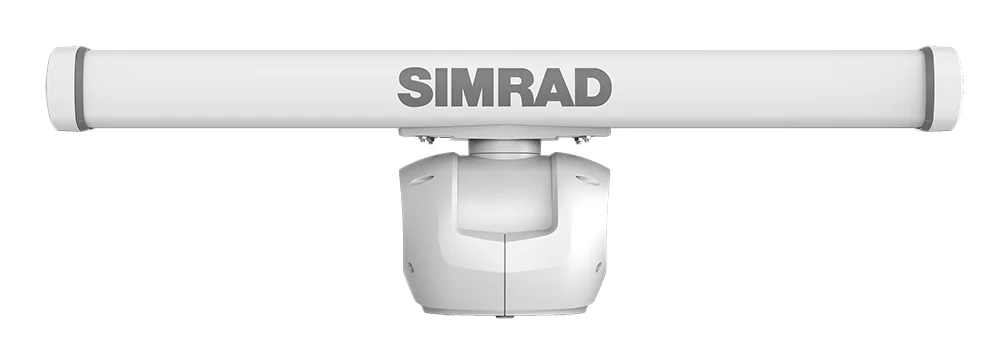
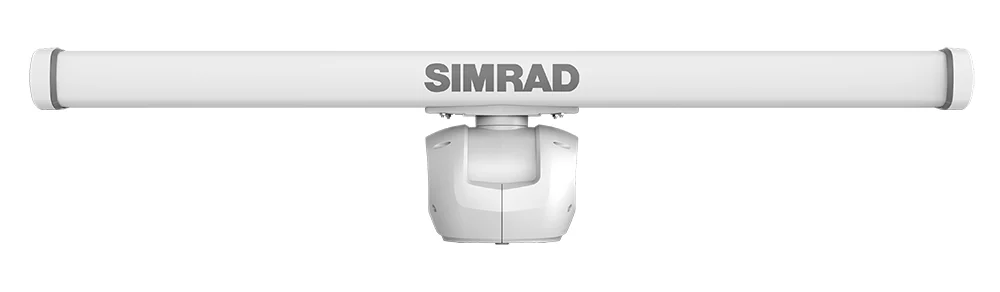
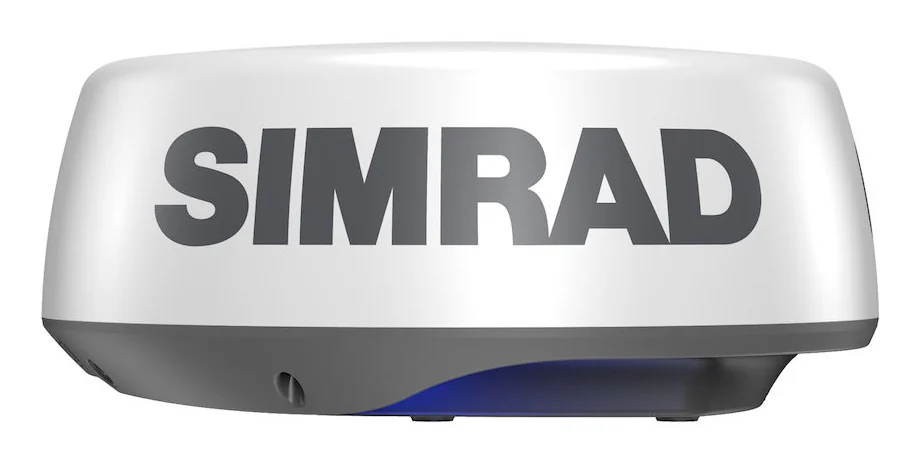
Radomes enclose a small antenna in a dome: light, compact and suited to sailboat masts and smaller powerboats. Open arrays rotate a longer antenna, giving a narrower beam that separates close targets better, at the cost of weight, power and a stronger mount.
- Beam width is the key figure: narrower separates close targets
- Radomes: lighter, mast-friendly, lower power
- Open arrays: sharper picture, need a hardtop or arch
- Antenna height limits real range more than the brochure figure
Beam width decides the picture
| Radar | Published horizontal beam | Weight |
|---|---|---|
| Lowrance HALO20 Radar | 4.9° | 13.0 lb |
| Simrad HALO20+ Radar | 4.9° | 13.0 lb |
| B&G HALO20 Radar | 4.9° | 13.0 lb |
| Simrad HALO24 Radar | 3.9° | 14.9 lb |
| B&G HALO24 Radar | 3.9° | 14.9 lb |
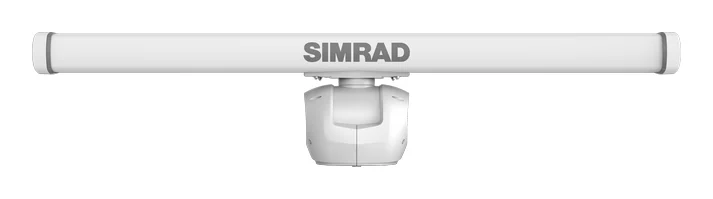
| Simrad HALO 2003 Open Array Radar | 2.4° | 64.4 lb |
| Simrad HALO 2004 Open Array Radar | 1.8° | 66.1 lb |
| Simrad HALO 2006 Open Array Radar | 1.2° | 69.7 lb |
| Simrad HALO 3006 Open Array Radar | 1.2° | 69.7 lb |
A wider beam paints two boats close together, or a buoy near the shore, as one return. The open arrays we cover publish horizontal beams of about 1–2.5°, against roughly 4–5° for 20–24 inch radomes.
Mounting and power
Radomes of 13–15 lb go on a mast bracket or small arch. Open arrays of 60–70 lb need a hardtop or radar arch rated for the load and more power from the house bank. Both connect to their own maker's chartplotters.
Range is set by height
Radar sees roughly to the horizon from the antenna's height, plus the target's. A radome 3 m above the water sees low targets only a few miles away whatever its rated range; mounting higher gains more than buying a longer-range unit.
Radome vs open array at a glance
| Radome | Open array | |
|---|---|---|
| Antenna size | About 18 to 24 in, enclosed | About 3 to 6 ft or longer, rotating |
| Horizontal beam width | Wider (typically about 4 to 5 degrees) | Narrower (typically about 1 to 2.5 degrees) |
| Target separation | Good | Better: separates close targets and shows coastline detail |
| Mounting | Small arches, masts, hardtops | Larger boats with a strong arch or mast |
| Power draw and weight | Lower | Higher |
| Typical boats | Under about 35 ft, sailboats | Larger cruisers and offshore boats |
Which to choose
- Small powerboats and sailboats: a radome; smaller, lighter and enough for collision avoidance and weather.
- Larger boats running offshore or in crowded harbors: an open array for sharper target separation.
- Mounting height matters more than maximum range: raise the antenna for real range gains.
- Solid-state radars warm up instantly and draw less power than older magnetron units.
Compare models in marine radar.
Products referenced in this guide
Questions readers ask
Is open array radar better than a radome?
How far can marine radar see?
What size radar do I need for a 30 ft boat?
What is beam width on a radar?
Sources
- Lowrance — Lowrance HALO20 Radar — product page and specifications Retrieved 24 Sep 2026
- Simrad — Simrad HALO 2003 Open Array Radar — product page and specifications Retrieved 24 Sep 2026
- Simrad — Simrad HALO 2004 Open Array Radar — product page and specifications Retrieved 24 Sep 2026
- Simrad — Simrad HALO 2006 Open Array Radar — product page and specifications Retrieved 24 Sep 2026
- Simrad — Simrad HALO 3006 Open Array Radar — product page and specifications Retrieved 24 Sep 2026
- Simrad — Simrad HALO20+ Radar — product page and specifications Retrieved 24 Sep 2026
- Simrad — Simrad HALO24 Radar — product page and specifications Retrieved 24 Sep 2026
- B&G — B&G HALO20 Radar — product page and specifications Retrieved 24 Sep 2026