Top-ranked on this list
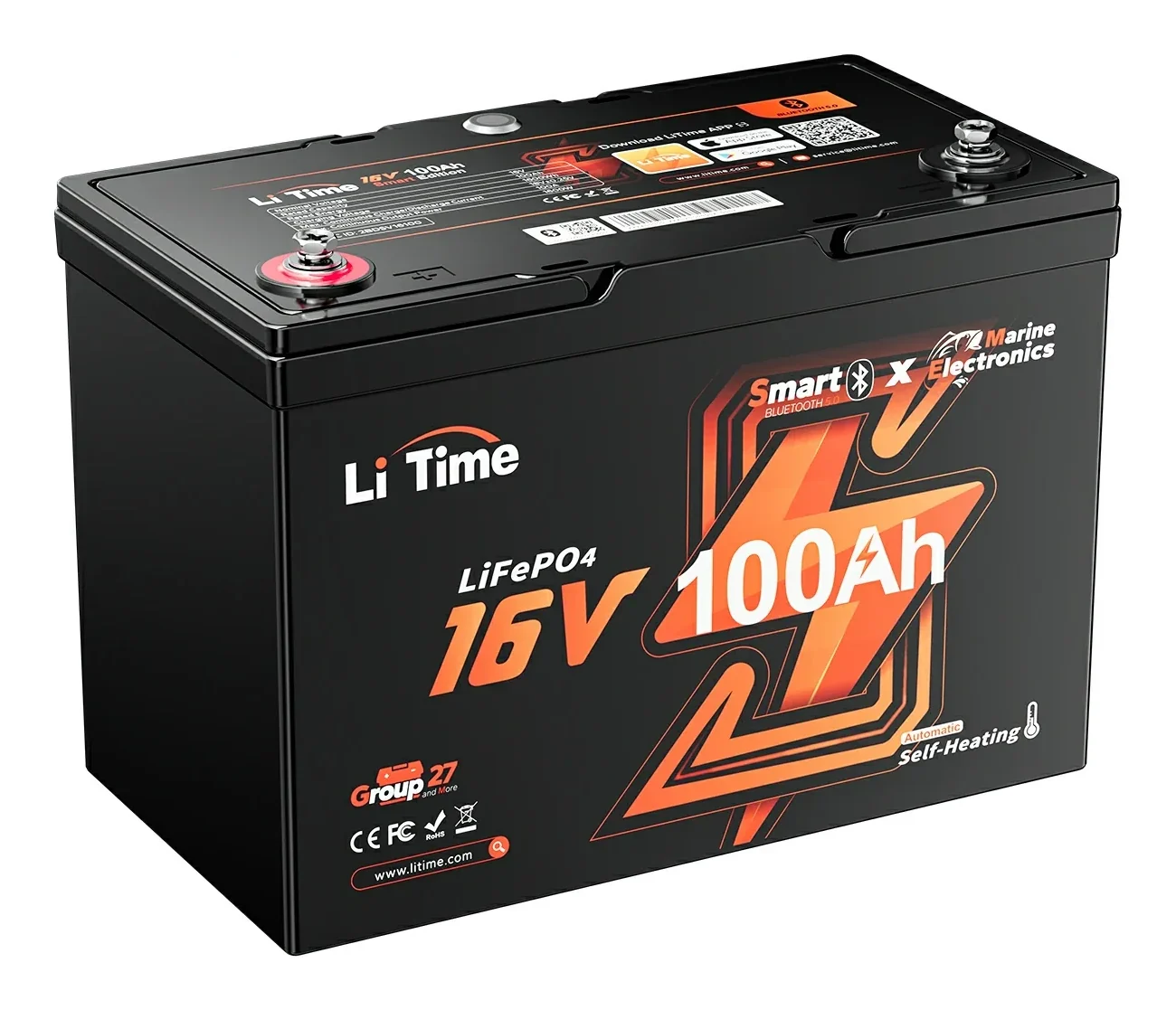
LiTime 16V 100Ah Fish Finder Battery
Cost per kWh: $225/kWh. A self-heating, Bluetooth 16 V battery for fish-finder and live-sonar circuits that accept a 16 V supply.
Watch for: Deep-cycle use; not rated for engine starting.
Best-of · 11 products qualified
A 16 V battery holds a steadier voltage for sonar and displays that accept it; check your electronics' input range first. 11 products we cover meet the criteria; they are ranked by cost per kwh, calculated from each maker's published figures and the store prices we observed in September 2026.
Top-ranked on this list
Cost per kWh: $225/kWh. A self-heating, Bluetooth 16 V battery for fish-finder and live-sonar circuits that accept a 16 V supply.
Watch for: Deep-cycle use; not rated for engine starting.
#2 on cost per kwh
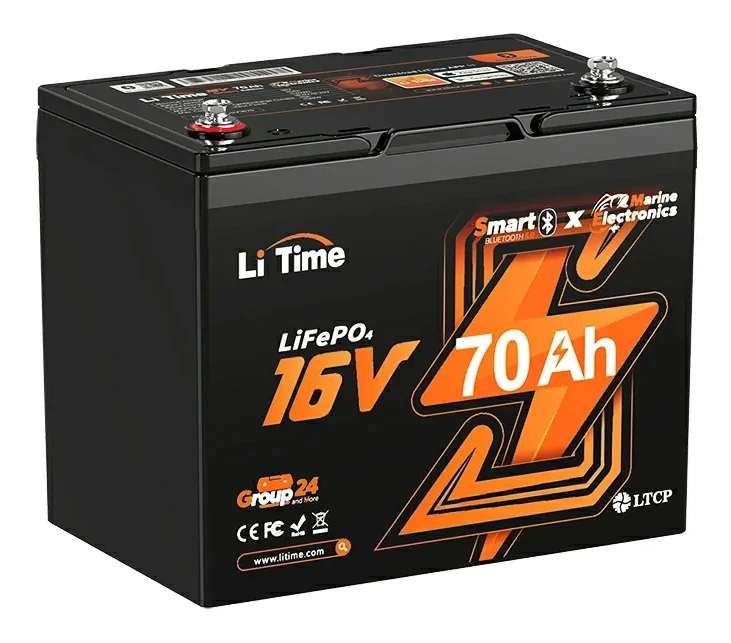
Cost per kWh: $269/kWh. A mid-size 16 V battery for a dedicated sonar and display circuit on a bass or multi-species boat.
Watch for: No self-heating listed — charging below freezing is restricted.
#3 on cost per kwh
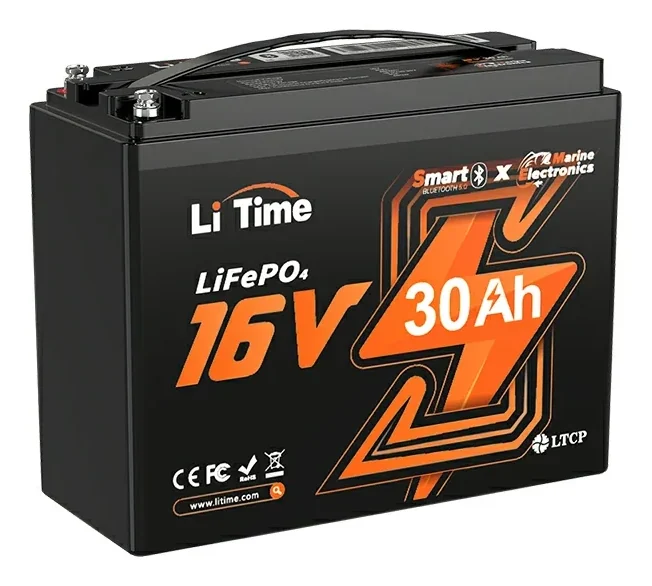
Cost per kWh: $412/kWh. A 7.6 lb, 16 V pack for kayak electronics whose input range extends above 16 V.
Watch for: No self-heating listed — charging below freezing is restricted.
#4 on cost per kwh
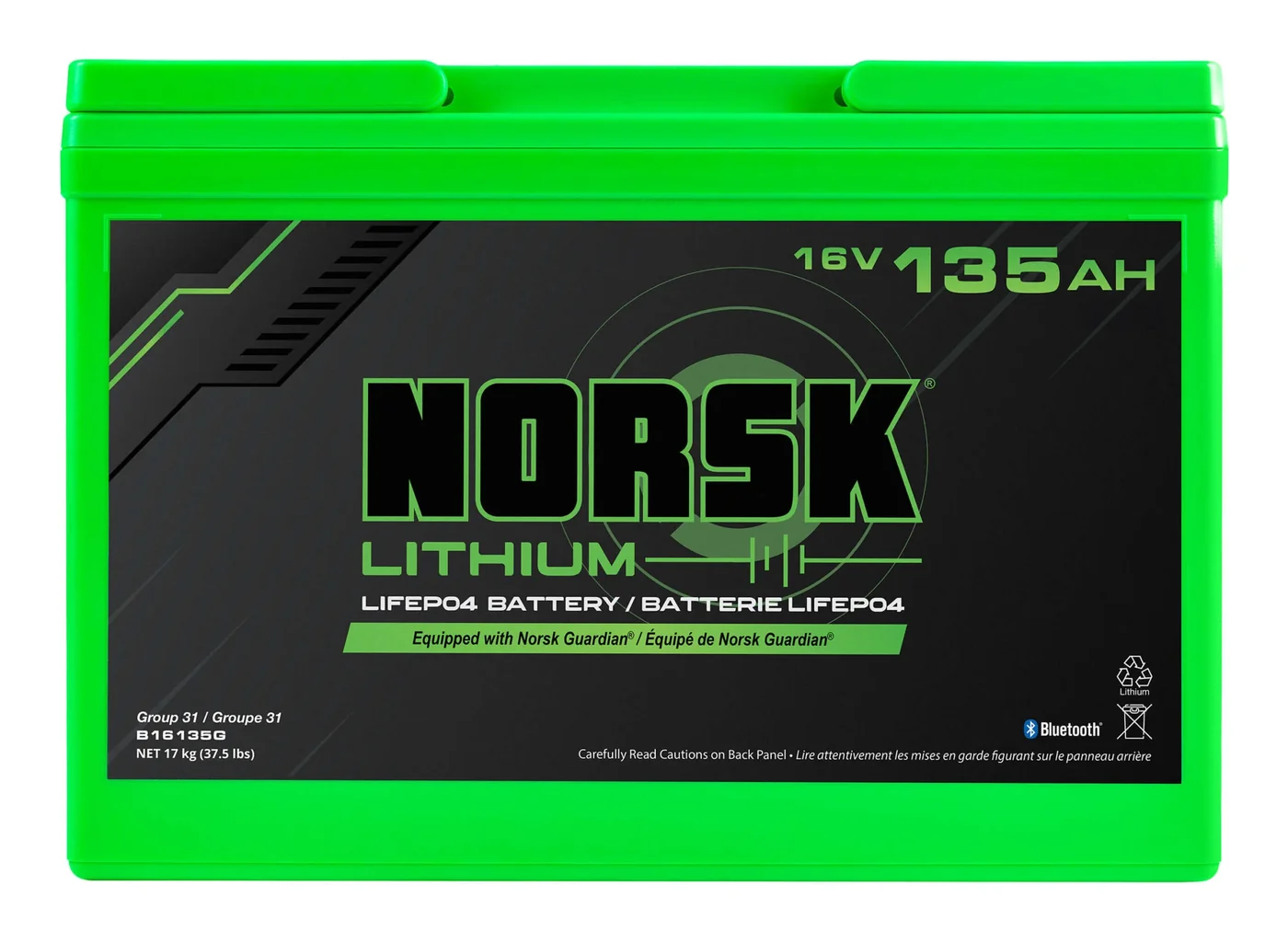
Cost per kWh: $449/kWh. A 135 Ah, 16 V electronics battery.
Watch for: No self-heating listed — charging below freezing is restricted.
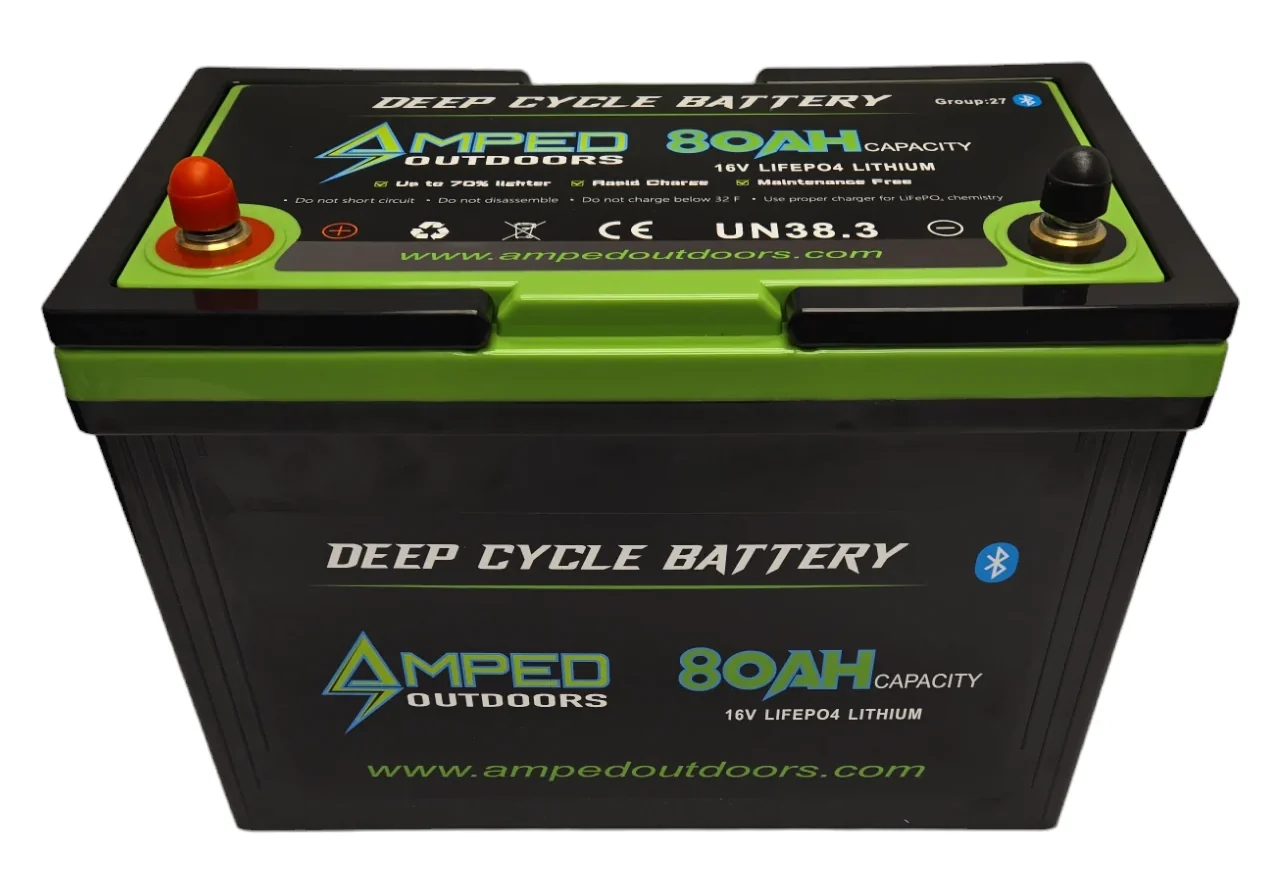
#5 on cost per kwh
Cost per kWh: $469/kWh. The larger Amped 16 V electronics battery, for multi-display setups running all day.
Watch for: No self-heating listed — charging below freezing is restricted.
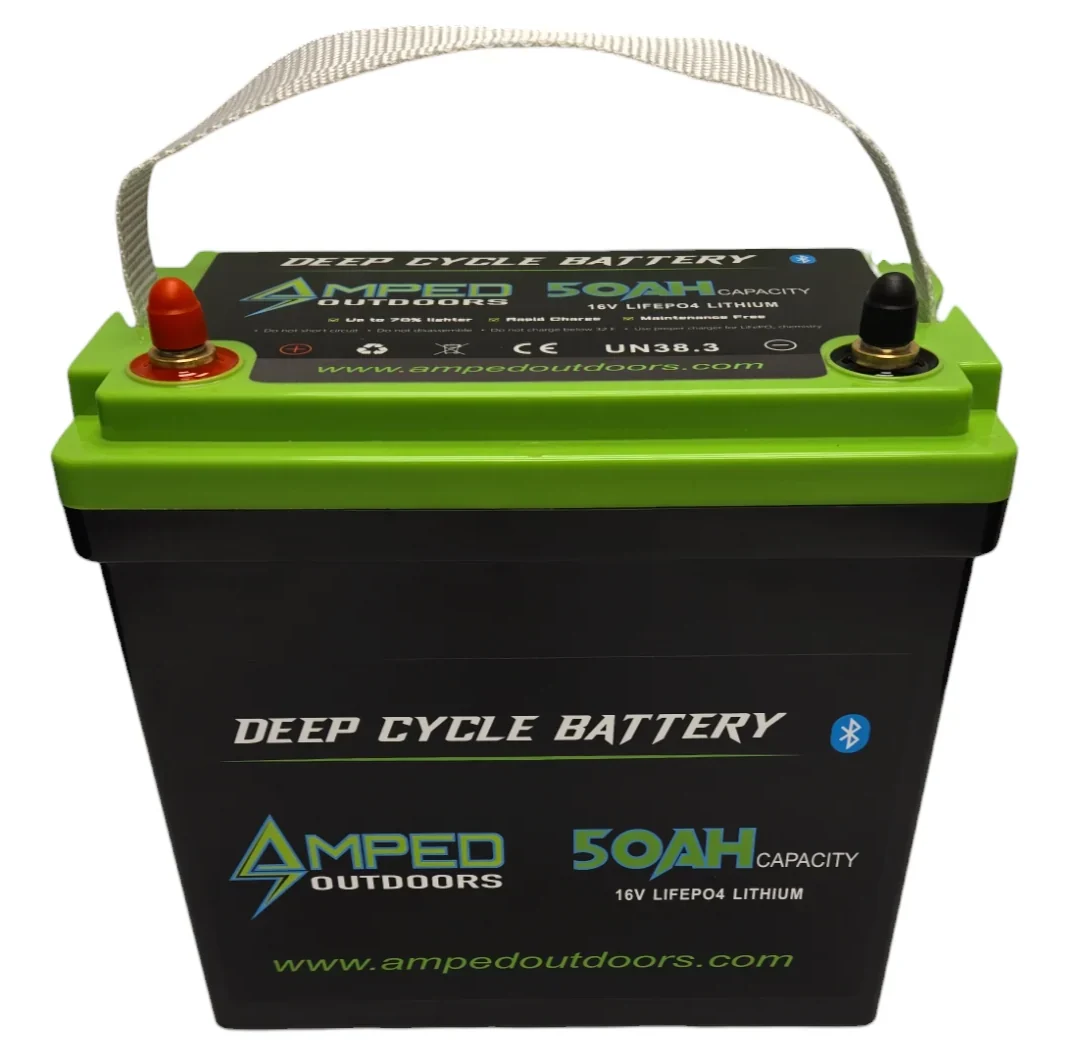
#6 on cost per kwh
Cost per kWh: $500/kWh. A 16 V battery for fish-finder and live-sonar circuits that accept a higher supply voltage, with Bluetooth monitoring.
Watch for: No self-heating listed — charging below freezing is restricted.
| Attribute | LiTime 16V 100Ah Fish Finder Battery | LiTime 16V 70Ah Bluetooth Battery | LiTime 16V 30Ah Kayak Fish Finder Battery | Norsk Lithium 16V 135Ah LiFePO4 Battery | Amped Outdoors 16V 80Ah LiFePO4 Battery | Amped Outdoors 16V 50Ah LiFePO4 Battery |
|---|---|---|---|---|---|---|
| Voltage | 16 V | 16 V | 16 V | 16 V | 16 V | 16 V |
| Capacity | 100 Ah | 70 Ah | 30 Ah | 135 Ah | 80 Ah | 50 Ah |
| Energy | 1,600 Wh | 1,120 Wh | 480 Wh | 2,160 Wh | 1,280 Wh | 800 Wh |
| Continuous | 100 A | 70 A | 30 A | 135 A | — | — |
| Weight | 26.5 lb | 19.1 lb | 7.6 lb | 37 lb | 22.1 lb | 18.1 lb |
| Heated | Yes | No | No | No | No | No |
| Bluetooth | Yes | Yes | Yes | No | Yes | Yes |
| Cost per kWh | $225/kWh | $269/kWh | $412/kWh | $449/kWh | $469/kWh | $500/kWh |
| Observed price | $360 | $301 | $198 | $970 | $600 | $400 |
A 16 V lithium battery (five LiFePO4 cells, about 16.8 V full) stays well above 12 V for nearly its whole discharge. Fish finders, forward-facing sonar and other electronics that run on a 12 V system can then hold full performance late into the day, and some anglers report fewer low-voltage alarms and less screen dimming on long sessions.
| Setup | Typical draw | Suggested capacity |
|---|---|---|
| One fish finder | About 1 to 2 A | 20 to 30 Ah |
| Two units | About 3 to 4 A | 30 to 50 Ah |
| Forward-facing sonar plus two displays | About 6 to 10 A | 50 to 100 Ah |
Multiply your total draw by the hours you fish and add about 20% margin. Use a charger designed for 16 V LiFePO4 batteries; a standard 12 V charger will not fully charge one. See forward-facing sonar for the power-hungry setups.