Small fish finders draw well under an amp; large networked displays draw several. Multiply the published draw by the hours you fish and add every display and module on the circuit — that is the capacity your electronics battery must supply.
- Energy per day (Ah) = draw (A) × hours
- Larger, brighter screens draw more
- Add live-sonar modules and transducers to the total
- A dedicated electronics battery avoids interference and voltage dips from the trolling motor
Published draw by screen size
Humminbird publishes a power-draw figure for every display we cover (Lowrance and Simrad do not list one on their product pages), so the table uses Humminbird's figures:
| Screen | Displays | Published draw |
|---|---|---|
| 4 in | 3 | 0.18 A |
| 5 in | 5 | 0.61 A |
| 7 in | 7 | 0.80 A |
| 9 in | 3 | 2.20 A |
| 10 in | 4 | 2.20 A |
| 12 in | 3 | 2.40 A |
| 13 in | 1 | 3.10 A |
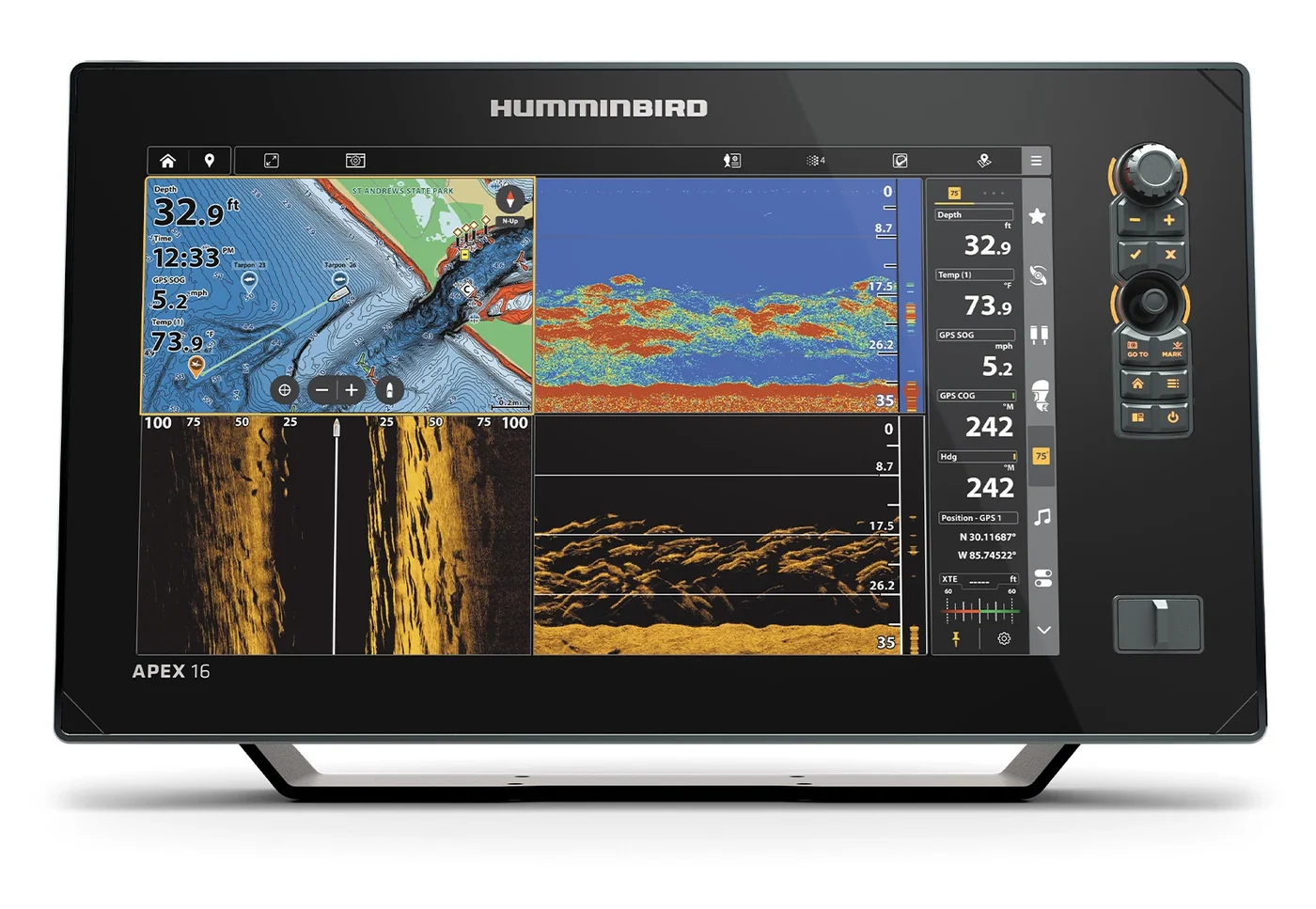
| 16 in | 1 | 4.30 A |
| 18 in | 1 | 4.40 A |
What a day takes
A 7-inch unit drawing about 0.8 A uses about 6.5 Ah over eight hours; a large display drawing 4 A uses 32 Ah. Two large displays plus live sonar can exceed 60 Ah a day — which is why many boats run electronics from their own lithium battery.
Wire it cleanly
Run power directly from the battery through a fuse sized to the maker's recommendation, keep power and transducer cables apart, and avoid sharing a battery with the trolling motor, whose current surges cause voltage dips and sonar noise.
Products referenced in this guide
Sources
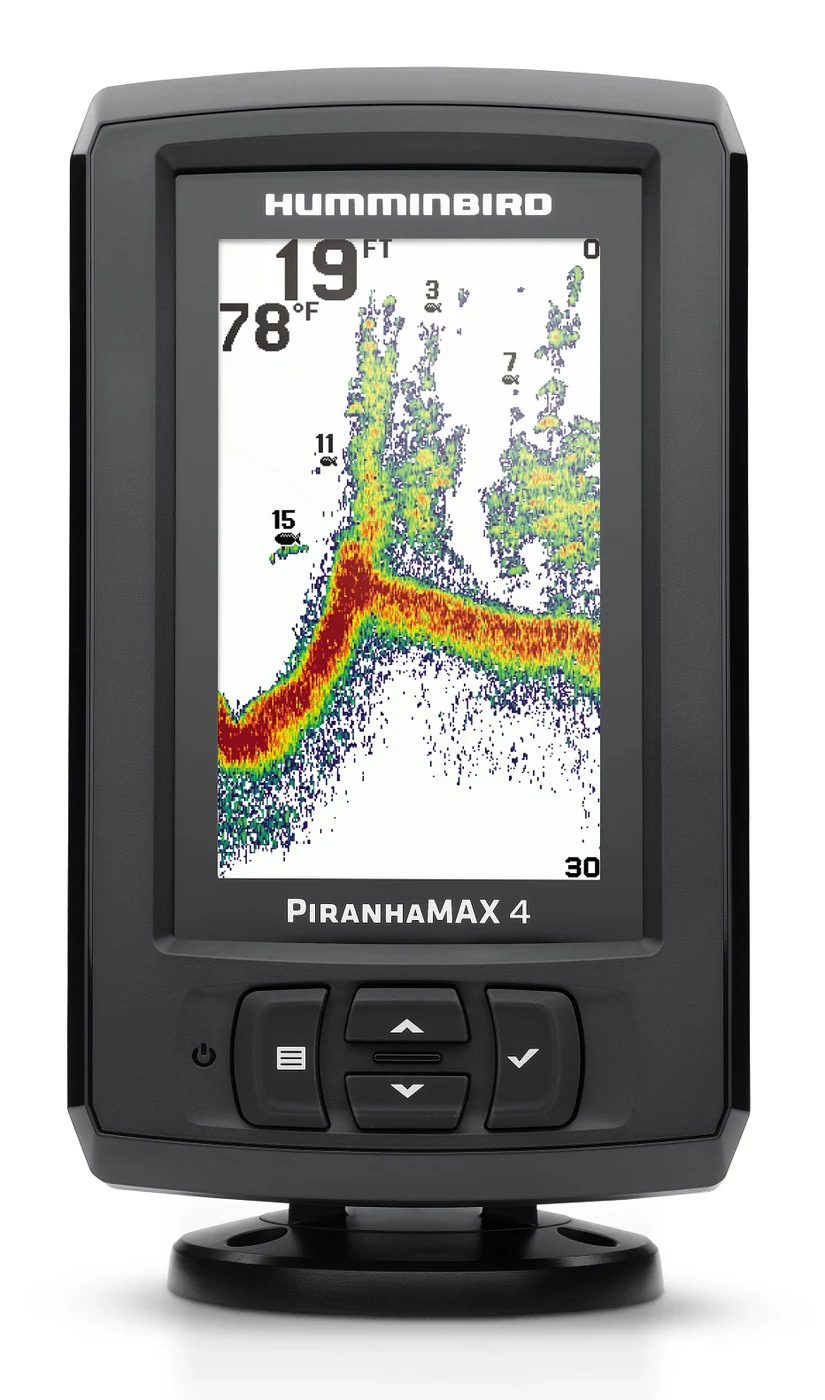
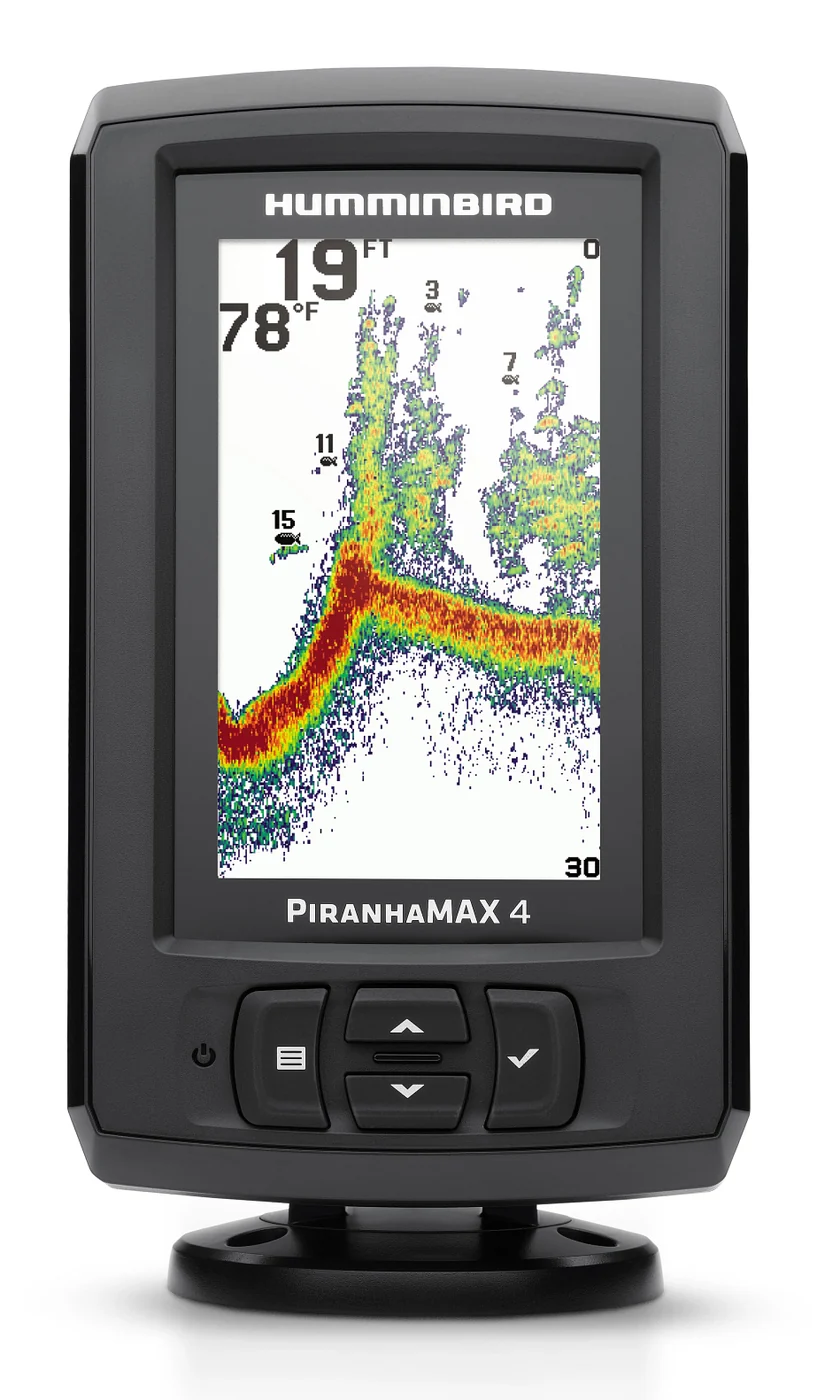
- Humminbird — Humminbird PiranhaMAX 4 DI — product page and specifications Retrieved 24 Sep 2026
- Humminbird — Humminbird PiranhaMAX 4 PT — product page and specifications Retrieved 24 Sep 2026
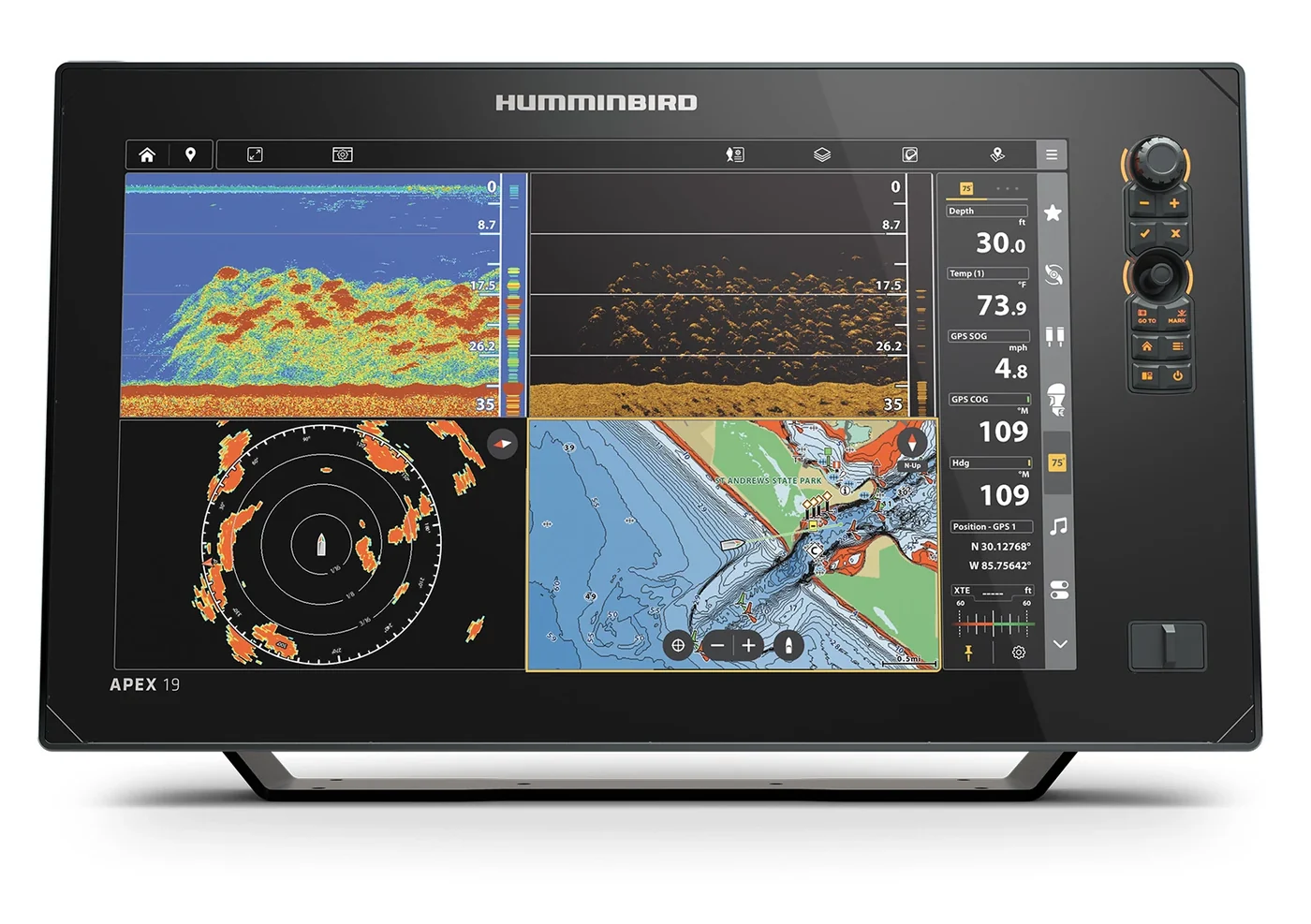
- Humminbird — Humminbird APEX 19 MEGA SI+ Chartplotter — product page and specifications Retrieved 24 Sep 2026
- Humminbird — Humminbird APEX 16 MEGA SI+ Chartplotter — product page and specifications Retrieved 24 Sep 2026