
Count the areas of the boat that need their own volume — helm, cockpit, bow, tower — and buy a head unit with at least that many zones. Then measure the dash: a 3-inch gauge hole, a DIN slot or a larger media-center cut-out. Finally, check the waterproof rating against where it will sit.
- Zones = separately adjustable speaker areas; wake boats typically want 3–4
- Gauge-hole units fit a standard 3-inch instrument hole
- Built-in amplifiers drive in-panel speakers; towers and subwoofers need an external amplifier
- An IP66 or higher rating suits open helms exposed to spray
1. Count your zones
A zone is a group of speakers with its own volume control. A single-zone receiver sends one volume to every speaker, which is fine on a small boat. On larger boats the driver wants the helm quiet while the bow or the tower plays loud for swimmers and riders. The stereos we cover break down like this:
| Zones | Models | Brands | Observed prices |
|---|---|---|---|
| 1 zone | 18 | Aquatic AV, DS18, Dual, Wet Sounds | $75–799 |
| 2 zones | 3 | DS18, Wet Sounds | $300–375 |
| 3 zones | 2 | DS18, Wet Sounds | $475–540 |
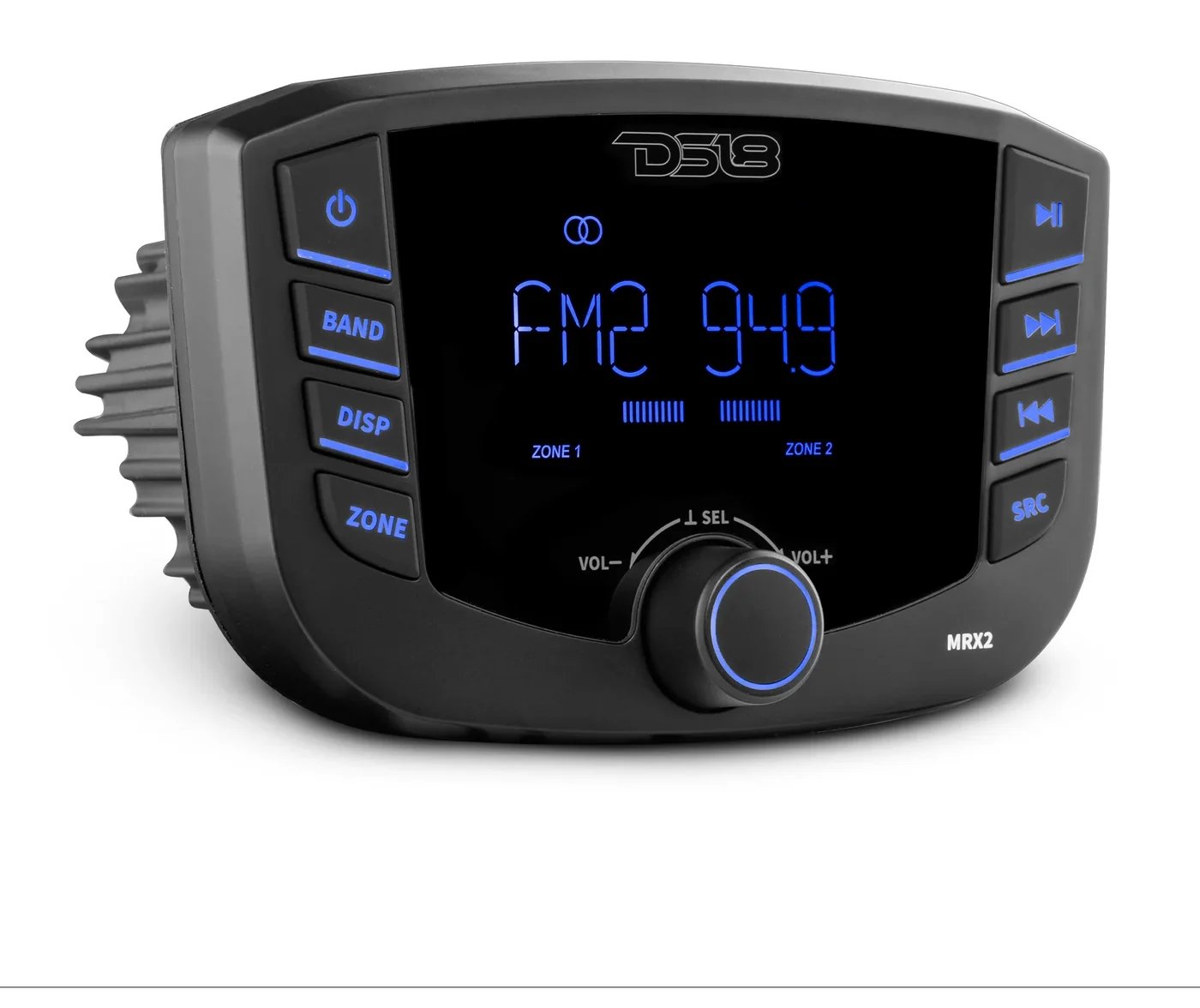
- DS18 MRX2 Headunit 3" LCD screen — 2 zones, $300
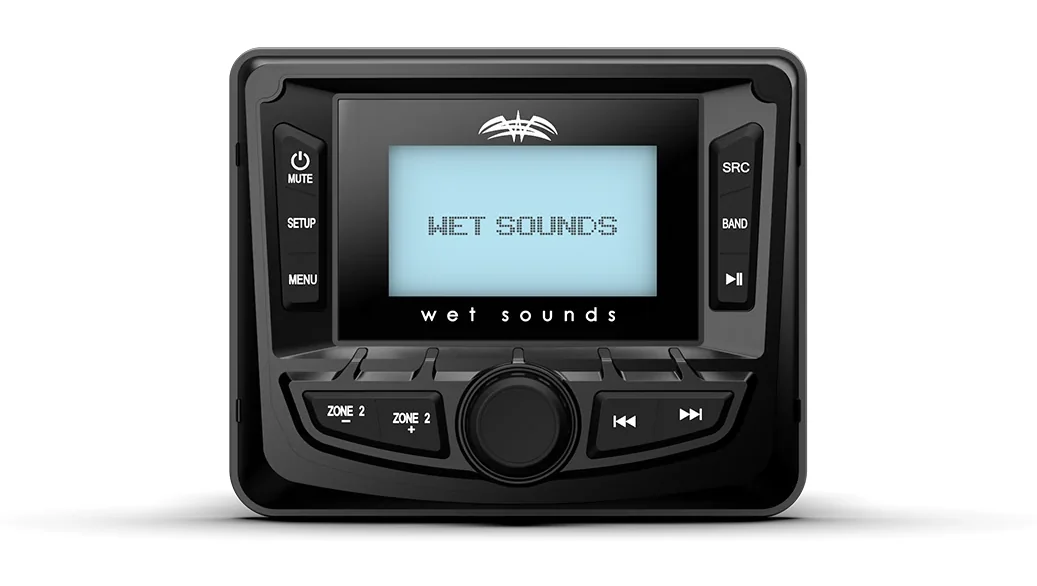
- Wet Sounds WS-MC-5 V2 AM/FM/Digital Tuner Media Center — 2.0 zones, $300
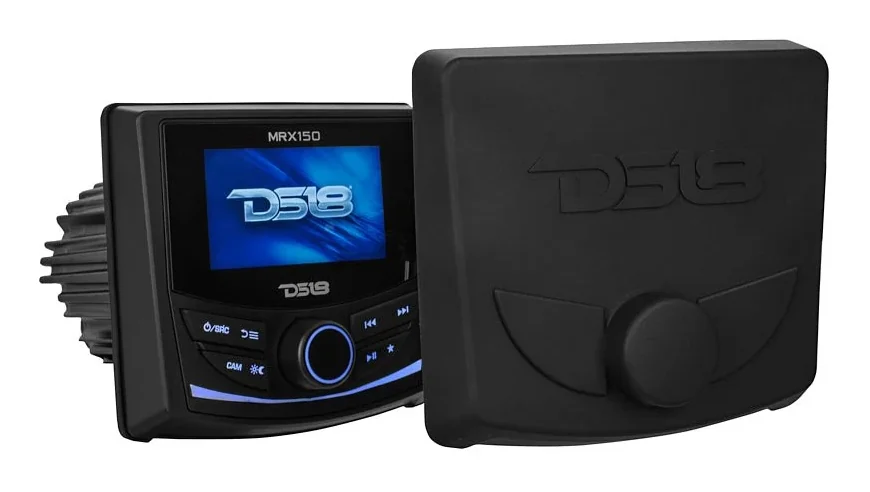
- DS18 MRX150 Headunit 3" Color TFT screen — 2 zones, $375
- DS18 MRX300 Marine Headunit TFT screen — 3 zones, $475
- Wet Sounds WS-ZX-MC-20 3-Zone Marine Media Center — 3 zones, $540
2. Measure the mounting space
Marine head units come in three common formats: gauge-hole units that fit a standard 3-inch (about 76 mm) instrument hole; single-DIN units the size of a car stereo; and larger rectangular media centers. Hide-away units put the electronics under the console with only a small remote or display at the helm. Check the cut-out and the depth behind the panel on the maker's drawing before cutting.
3. Sources and control
Bluetooth streaming from a phone is the most-used source. Beyond that, look for AM/FM with weather band, SiriusXM readiness if you subscribe, USB, and NMEA 2000 if you want to control the stereo from a chartplotter.
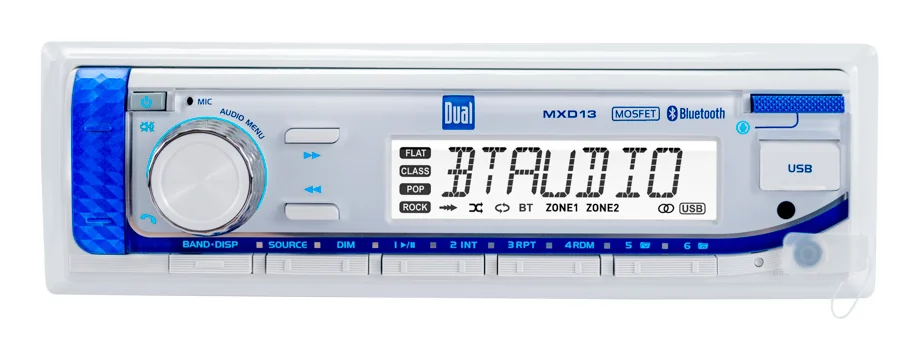
- Dual MXD13 Marine Digital Media Receiver with Bluetooth Connectivity — Bluetooth, $75
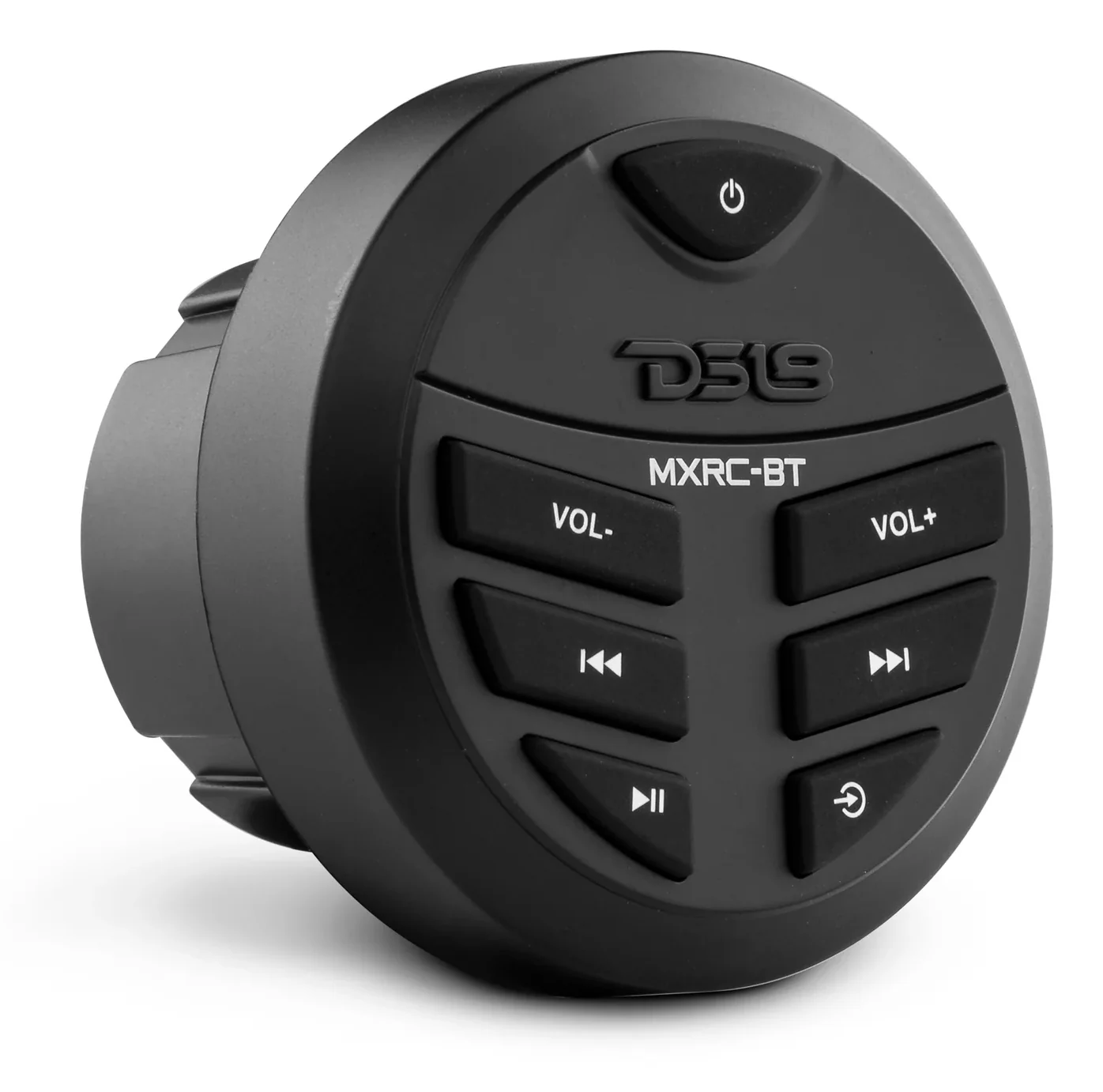
- DS18 MXRC-BT Marine And Powersports Bluetooth Audio Receiver — Bluetooth, $90
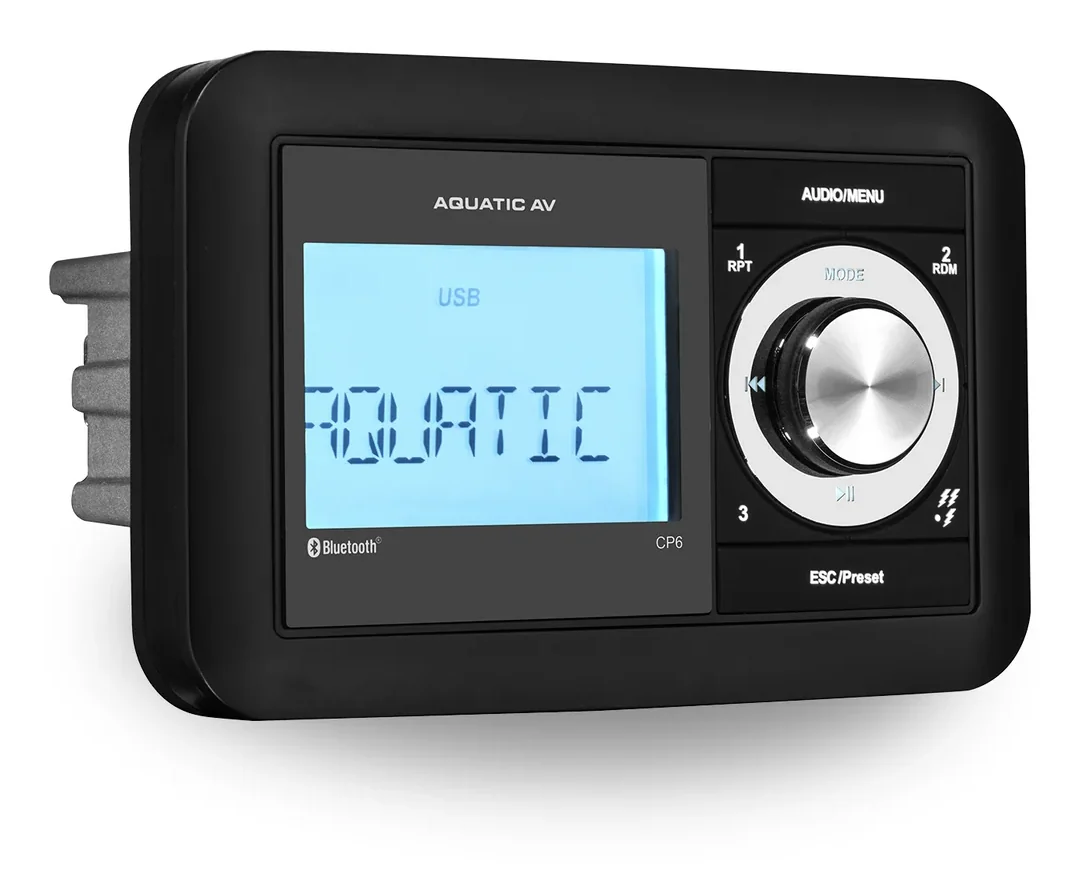
- Aquatic AV CP6 Bluetooth Stereo — Bluetooth, $175
- Aquatic AV MP6 Bluetooth Stereo — Bluetooth, $199
4. Built-in power versus an amplifier
Head-unit power is modest — enough for in-panel speakers at conversation levels. Wake-tower speakers and subwoofers need an external marine amplifier; plan amplifier channels per speaker pair and zone from the start.
5. Weatherproofing and displays
Marine stereos live in sun, spray and salt. Look for an IP rating on the head unit's face, UV-resistant materials and a display you can read in direct sunlight.
| Rating | What it means | Where it fits |
|---|---|---|
| IPX5 | Protected against water jets | Under a T-top or in a console |
| IPX6 | Protected against powerful water jets | Exposed helms |
| IPX7 | Survives temporary immersion | Open boats, PWCs, wakeboats |
6. Integration with the rest of the boat
- NMEA 2000: lets you control the stereo from a compatible chartplotter and see audio on the helm display.
- Remotes: wired remotes at the stern or flybridge make each zone easy to adjust.
- Gauge-style units: fit a standard 3-inch gauge hole for tight dashes.
- Battery protection: a low-voltage cut-off or a separate house battery stops the stereo draining the starting battery.
Pair the head unit with the right speakers using the marine speaker buying guide.
Products referenced in this guide
Questions readers ask
What IP rating should a marine stereo have?
Can I control my marine stereo from my chartplotter?
Do I need an amplifier for a marine stereo?
How do I stop the stereo draining my battery?
Sources
- DS18 — DS18 MRX2 Headunit 3" LCD screen — product page and specifications Retrieved 25 Sep 2026
- Wet Sounds — Wet Sounds WS-MC-5 V2 AM/FM/Digital Tuner Media Center — product page and specifications Retrieved 25 Sep 2026
- DS18 — DS18 MRX150 Headunit 3" Color TFT screen — product page and specifications Retrieved 25 Sep 2026
- Dual — Dual MXD13 Marine Digital Media Receiver with Bluetooth Connectivity — product page and specifications Retrieved 25 Sep 2026
- DS18 — DS18 MXRC-BT Marine And Powersports Bluetooth Audio Receiver — product page and specifications Retrieved 25 Sep 2026
- Aquatic AV — Aquatic AV CP6 Bluetooth Stereo — product page and specifications Retrieved 25 Sep 2026