Start with the hole you have: most boats use 6.5-inch speakers, with 8-inch and 6×9 ovals in larger panels. Check the mounting depth behind the panel. Then compare RMS power — the continuous rating — and match it to the amplifier channel or head unit that will drive the speaker.
- Measure the cut-out and the depth behind the panel first
- Compare RMS power; peak figures are usually double and mean little
- Most marine speakers are 4 Ω; check the amplifier's supported load
- Marine construction: UV-stable cones, sealed surrounds, corrosion-resistant hardware
What the sizes deliver
Across the marine speakers we cover, the published RMS ratings by size are:
| Size | Models | RMS power published | Brands |
|---|---|---|---|
| 6.5 in | 24 | 20–250 W RMS | Aquatic AV, DS18, Dual, Wet Sounds |
| 8 in | 4 | 70–350 W RMS | DS18, Dual, Wet Sounds |
| 6 × 9 in | 3 | 50 W RMS | Dual, Wet Sounds |
Larger cones move more air and play lower and louder, but only if the panel is deep enough and the amplifier can supply the power.
RMS, peak and matching the amplifier
RMS power is what a speaker handles continuously; peak is a momentary figure. A speaker rated 100 W RMS pairs well with an amplifier channel of roughly 75–150 W RMS at the same impedance. Driving a high-power speaker from a head unit's built-in amplifier works, but it will not reach the speaker's potential.
Best value 6.5-inch speakers on published RMS power
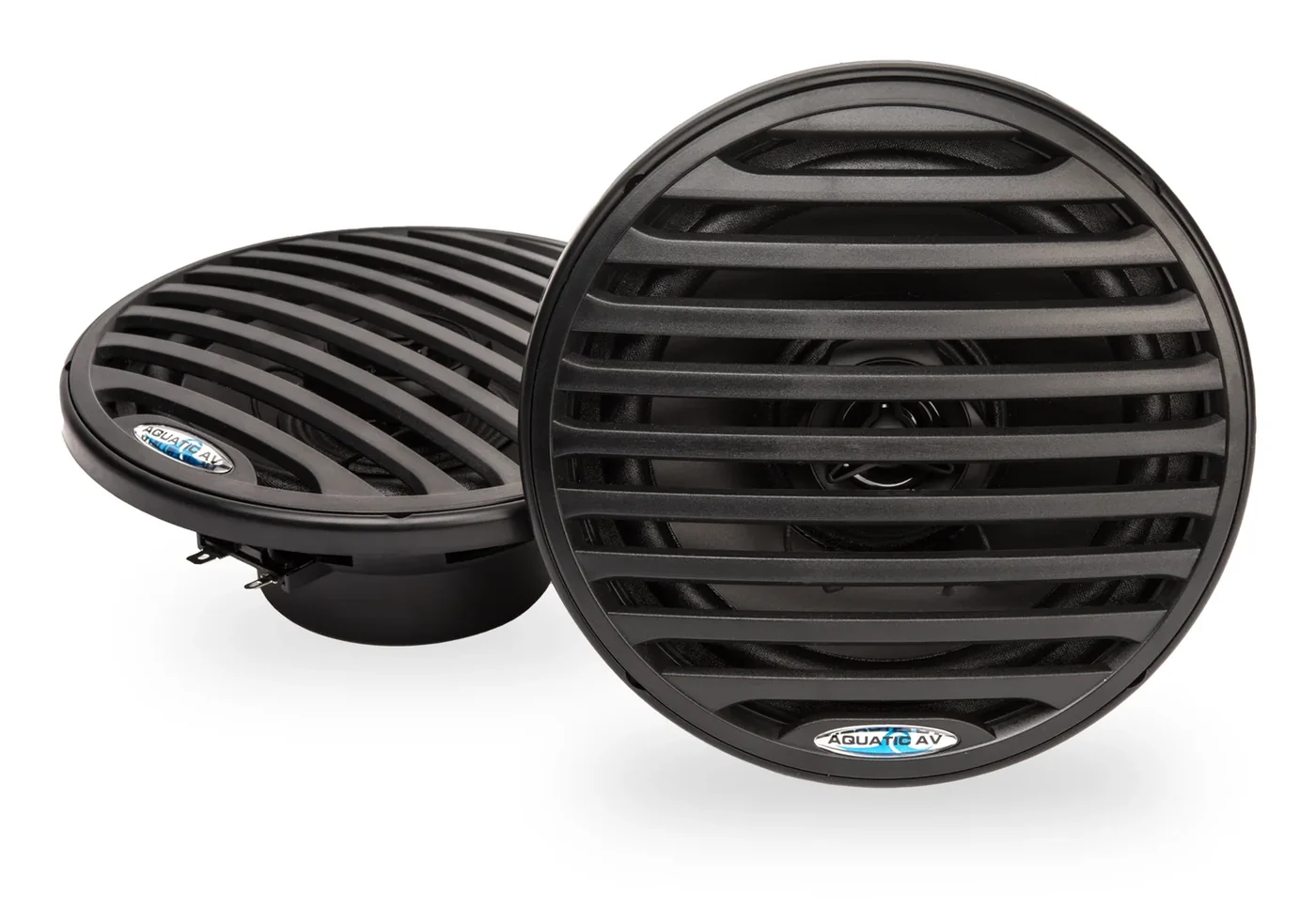
- Aquatic AV Economy 6.5" Speakers — 80 W RMS, $0.99 per RMS watt
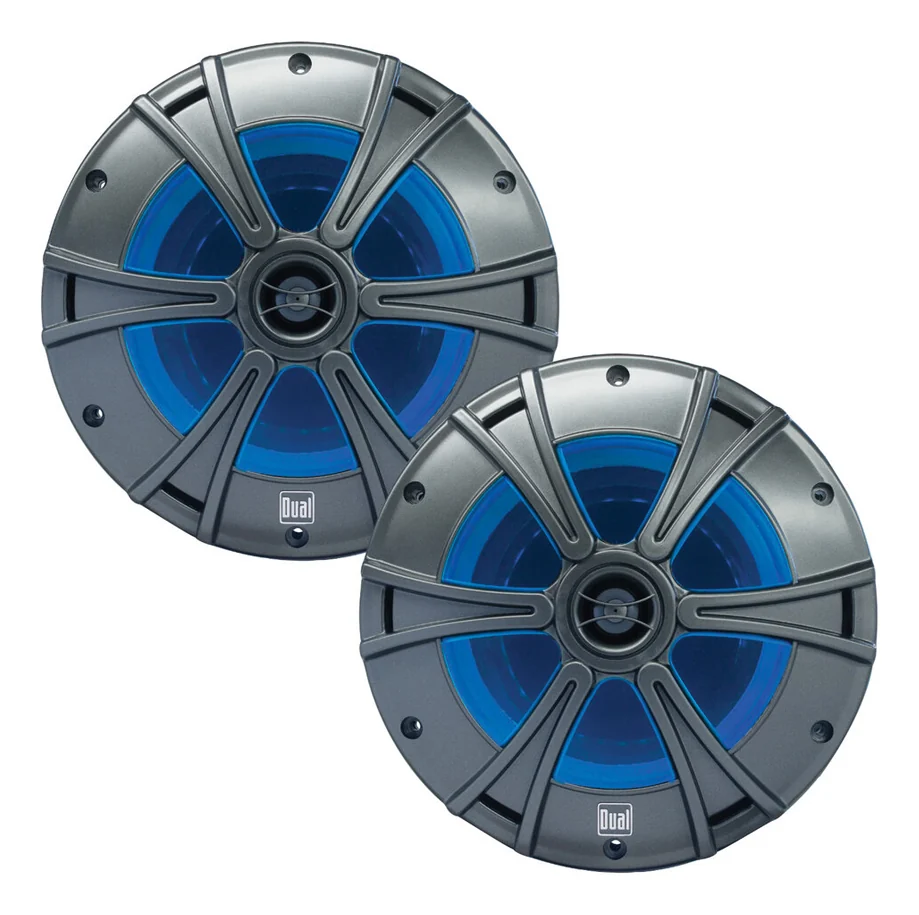
- Dual DMS6516 6.5″ 2-Way Speakers — 75 W RMS, $1.33 per RMS watt
- Aquatic AV NEO 6.5" Speakers — 240 W RMS, $1.58 per RMS watt
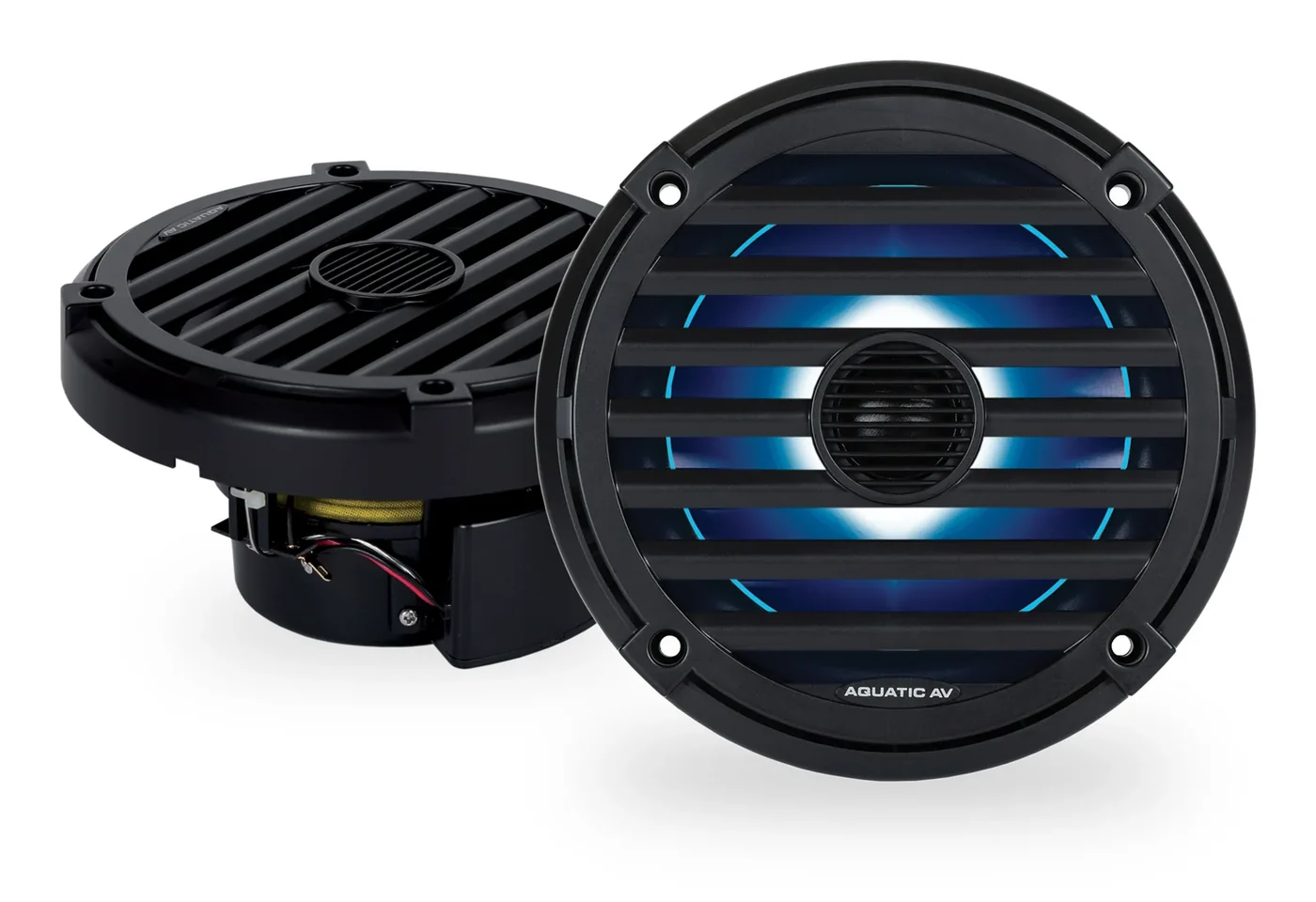
- Aquatic AV ELITE 6.5" RGB Speakers — 120 W RMS, $1.66 per RMS watt
Mounting and waterproofing
Marine speakers are built to shed water from the front, but the back of the speaker should be in a dry, ventilated space. Surface-mount and shallow-mount models suit thin side panels and seat bases. Lighted (RGB) speakers need a compatible lighting controller, usually sold separately.
Choosing by boat and use
| Boat or use | Typical speakers | Notes |
|---|---|---|
| Small fishing boat | Pair of 6.5 in coaxials | Head unit power is often enough |
| Bowrider or pontoon | Four to six 6.5 or 7.7 in speakers | Zones for bow and cockpit |
| Wakeboat or towers | Tower speakers plus an amplifier | Sound must carry to the rider behind the boat |
| Cabin cruiser | Separate cabin and deck zones | Lower volume inside, more outside |
Open-air boats need more power than a car because there is no enclosed cabin to reinforce bass. A small marine subwoofer or an amplifier makes a bigger difference than spending more on the head unit.
LED lighting and care
- LED-lit speakers add color at night; make sure the lighting controller matches your stereo or remote.
- Use marine-grade, tinned speaker wire; bare copper corrodes quickly in salt air.
- Seal cutouts and use the maker's gaskets to keep water out of the boat structure.
- Rinse grilles with fresh water after saltwater trips.
Choose the head unit with how to choose a marine stereo.
Products referenced in this guide
Questions readers ask
What size marine speakers should I get?
Do marine speakers need an amplifier?
What does RMS mean on a speaker?
Are car speakers OK on a boat?
Sources
- Aquatic AV — Aquatic AV Economy 6.5" Speakers — product page and specifications Retrieved 25 Sep 2026
- Dual — Dual DMS6516 6.5″ 2-Way Speakers — product page and specifications Retrieved 25 Sep 2026
- Aquatic AV — Aquatic AV NEO 6.5" Speakers — product page and specifications Retrieved 25 Sep 2026
- Aquatic AV — Aquatic AV ELITE 6.5" RGB Speakers — product page and specifications Retrieved 25 Sep 2026
- Aquatic AV — Aquatic AV 3" Coaxial Speaker — product page and specifications Retrieved 25 Sep 2026