
Both transmit on 406 MHz to the Cospas-Sarsat satellite system. An EPIRB is registered to the vessel, is larger, transmits for at least 48 hours and can deploy automatically; a PLB is registered to a person, fits on a life jacket, transmits for at least 24 hours and must be activated by hand. Offshore boats carry both.
- EPIRB: the vessel's beacon; Category I releases and activates automatically
- PLB: your beacon; worn on the life jacket, activated by hand
- GPS sends your position with the alert; AIS alerts boats nearby
- Register every beacon free with NOAA (US) and keep the registration current
The beacons we cover
| Beacon | Type | GPS | AIS | Return Link | Battery life (listed) |
|---|---|---|---|---|---|
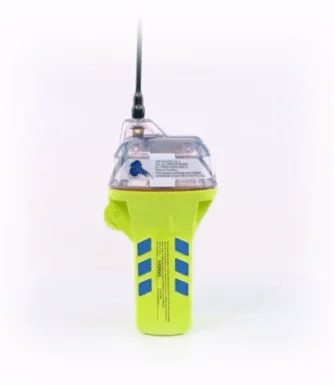
| ACR GlobalFix iPRO EPIRB | EPIRB | Yes | — | — | 48 hours minimum |
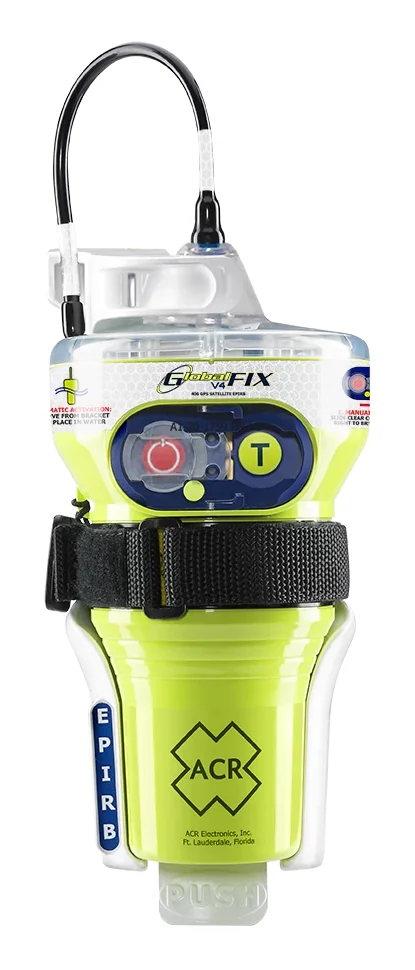
| ACR GlobalFix V4 EPIRB | EPIRB | Yes | — | — | 48 hours minimum |
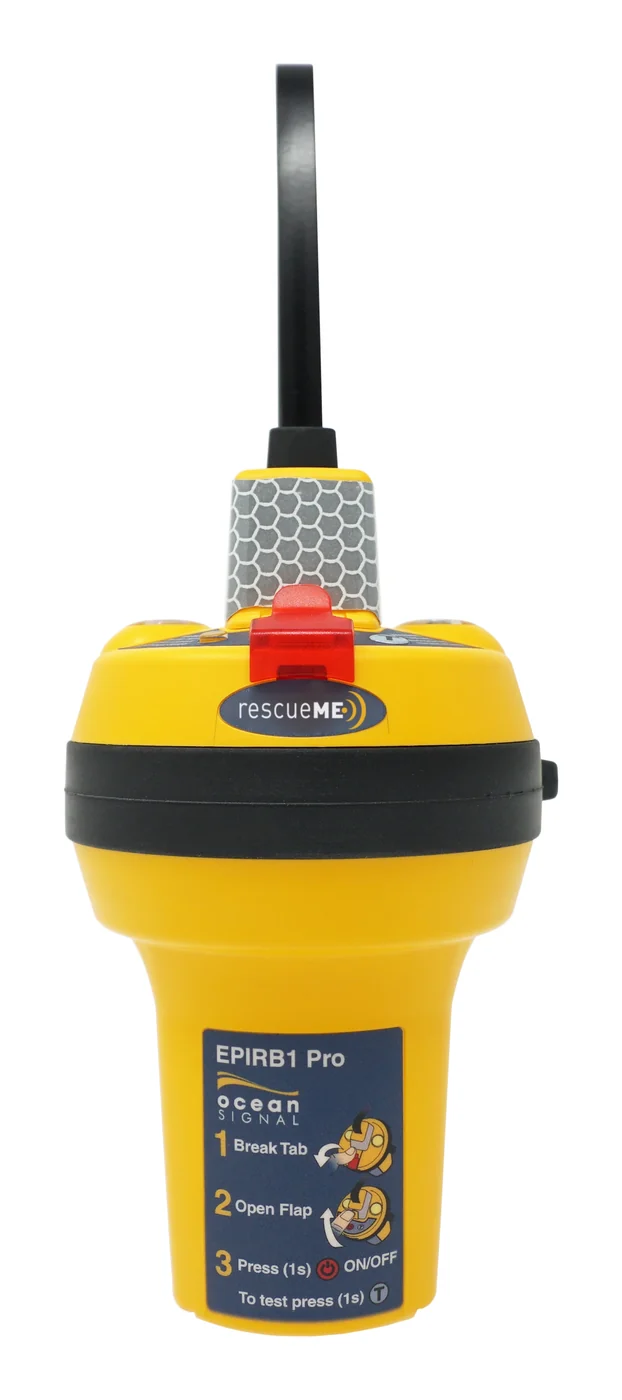
| Ocean Signal rescueME EPIRB1 Pro | EPIRB | Yes | — | — | over 48 hours |
| Ocean Signal rescueME EPIRB1 | EPIRB | — | — | — | 48 hours |
| Ocean Signal rescueME EPIRB2 Pro | EPIRB | Yes | — | Yes | 48 hours minimum |
| Ocean Signal rescueME EPIRB2 | EPIRB | Yes | — | Yes | 48 hours minimum |
| Ocean Signal rescueME EPIRB3 | EPIRB | Yes | — | — | 48 hours |
| Ocean Signal safeSEA EPIRB3 Pro | EPIRB | Yes | — | — | over 48 hours |
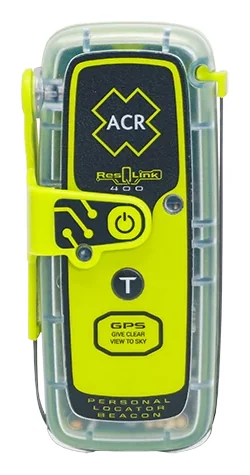
| ACR ResQLink 400 Personal Locator Beacon | PLB | Yes | — | — | 24+ hours |
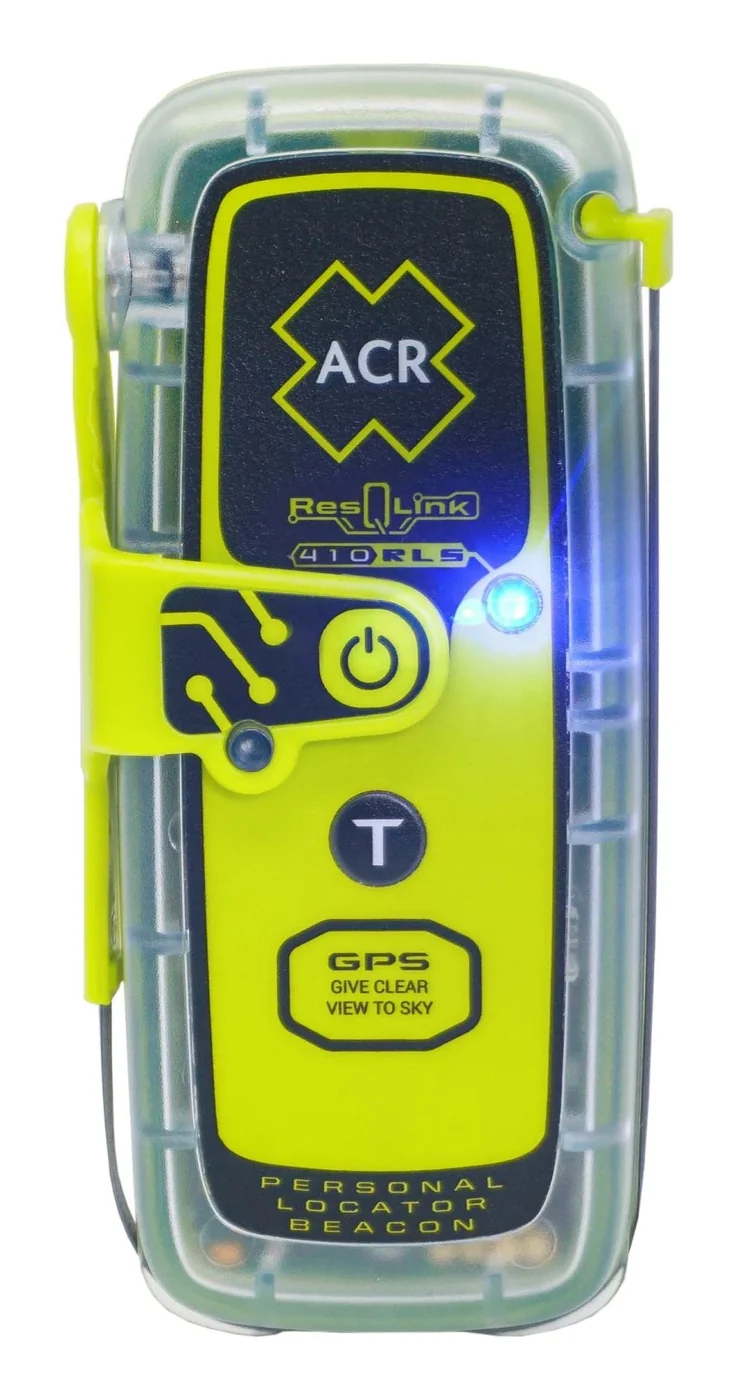
| ACR ResQLink 410 RLS Personal Locator Beacon | PLB | Yes | — | Yes | 24+ hours |
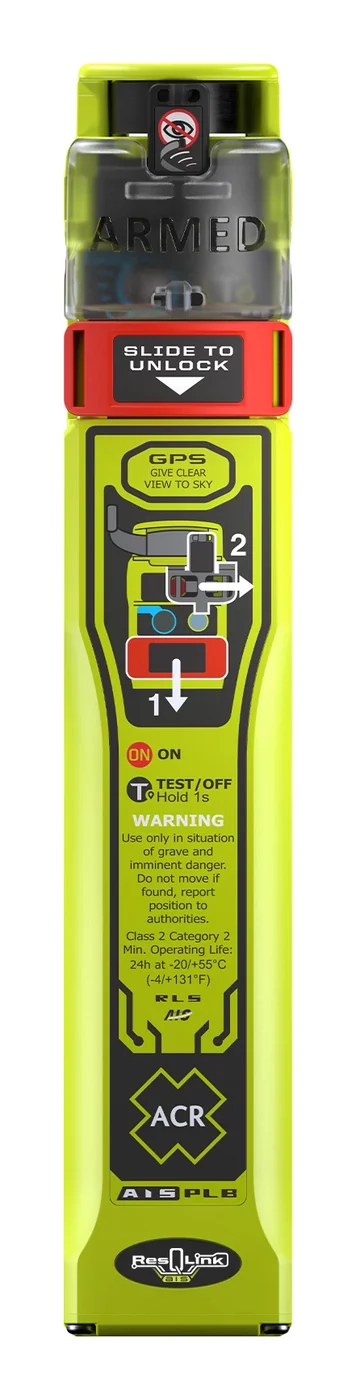
| ACR ResQLink AIS Personal Locator Beacon | PLB | Yes | Yes | Yes | 24 hours |
| ACR ResQLink View Personal Locator Beacon | PLB | Yes | — | — | 28 hours |
| ACR ResQLink View RLS Personal Locator Beacon | PLB | Yes | — | Yes | 28 hours |
| Ocean Signal rescueME PLB1 Personal Locator Beacon | PLB | Yes | — | — | over 24 hours |
| Ocean Signal rescueME PLB3 AIS Personal Locator Beacon | PLB | Yes | Yes | — | over 24 hours |
When you need an EPIRB
An EPIRB identifies the boat, so rescuers know what they are looking for and how many may be aboard. Category I units sit in a hydrostatic-release bracket that frees and activates the beacon if the boat sinks; Category II units are mounted within reach and released by hand. Commercial vessels are required to carry them; for recreational boats they are the standard for offshore passages.
When you need a PLB
A PLB goes with a person — including overboard, into a life raft or ashore. Wear it on the life jacket where it can be reached with one hand. Some PLBs float on their own; others need a flotation pouch. AIS-equipped PLBs also show the casualty on nearby plotters, which is usually the fastest rescue after falling overboard.
Registration and upkeep
Register each 406 MHz beacon's unique ID with NOAA (US) or your national authority — it is free — and renew it every two years or when details change. Replace the battery (and the hydrostatic release on Category I EPIRBs) by the dates printed on the unit, and use the self-test as the maker describes.
Products referenced in this guide
Sources
- ACR — ACR GlobalFix iPRO EPIRB — product page and specifications Retrieved 25 Sep 2026
- ACR — ACR GlobalFix V4 EPIRB — product page and specifications Retrieved 25 Sep 2026
- Ocean Signal — Ocean Signal rescueME EPIRB1 Pro — product page and specifications Retrieved 25 Sep 2026
- ACR — ACR ResQLink 400 Personal Locator Beacon — product page and specifications Retrieved 25 Sep 2026
- ACR — ACR ResQLink 410 RLS Personal Locator Beacon — product page and specifications Retrieved 25 Sep 2026
- ACR — ACR ResQLink AIS Personal Locator Beacon — product page and specifications Retrieved 25 Sep 2026