
An AIS MOB beacon broadcasts the casualty's GPS position to every AIS receiver within a few miles and shows it on the plotter; many fire automatically when the life jacket inflates. A wireless crew alarm alarms on your own boat — and can stop the engine — the moment a tagged crew member goes out of range. Short-handed crews benefit from both.
- AIS MOB: position to your plotter and nearby vessels
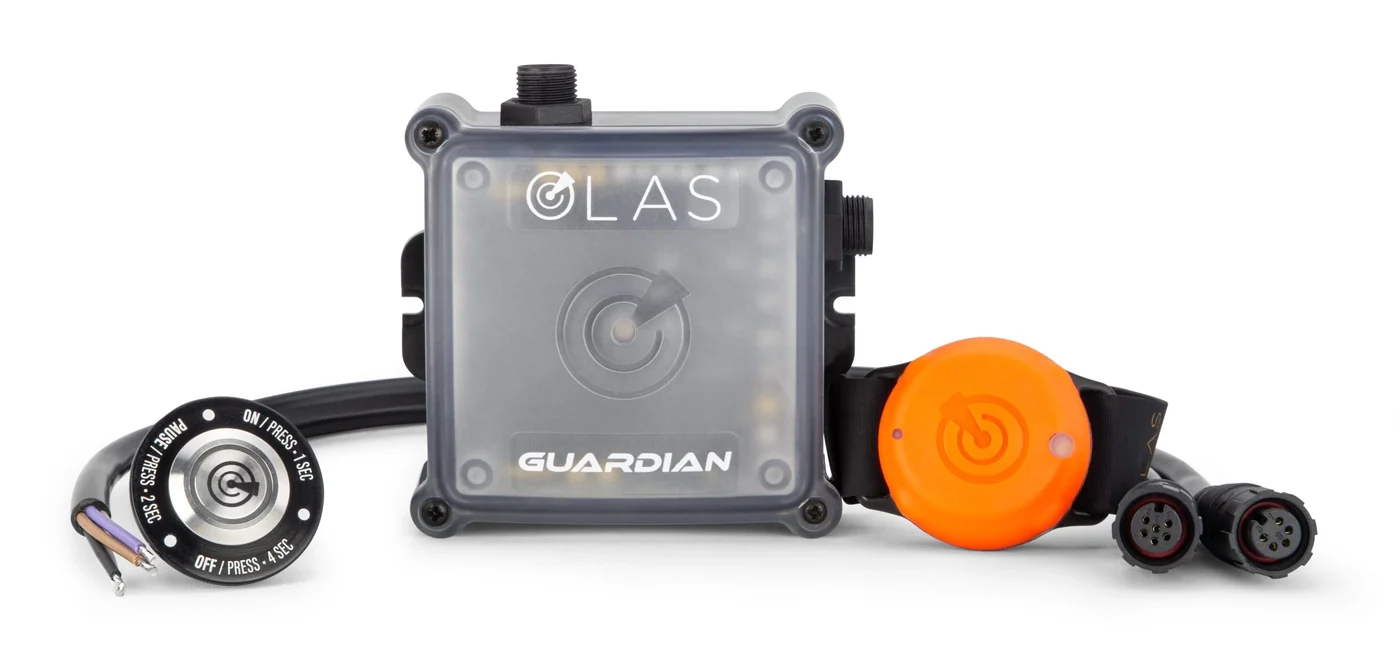
- Crew alarm: instant alarm and engine kill on your own boat
- Neither calls satellites — carry a PLB for long-range rescue
- Test and service to the maker's schedule
Devices we cover
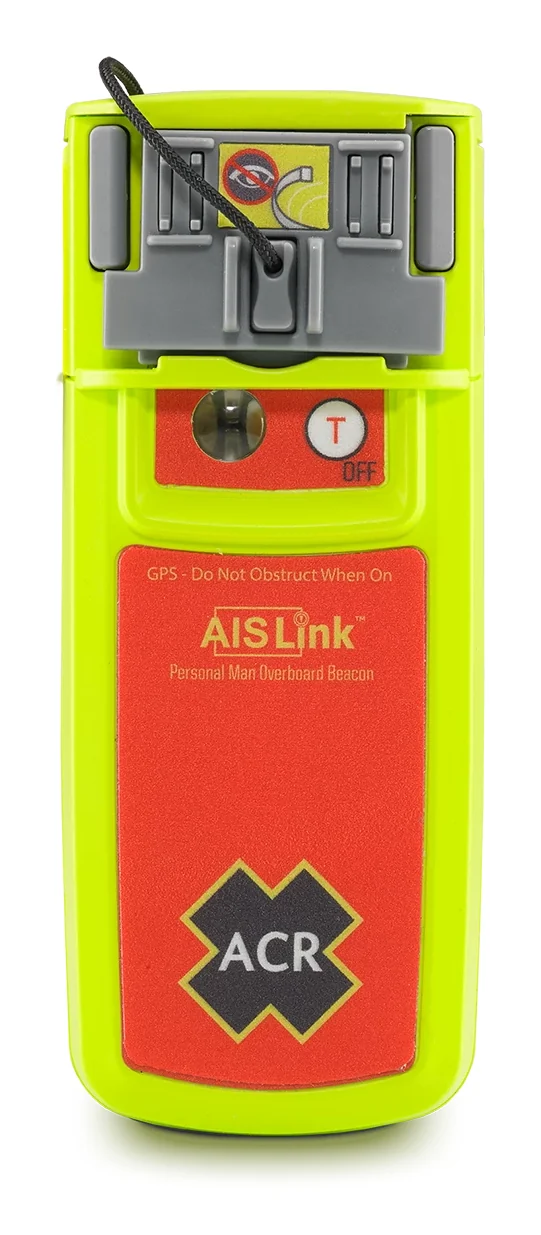
- ACR AISLink MOB — AIS, 24+ hours
- ACR EXPOSURE OLAS GUARDIAN — wireless alarm
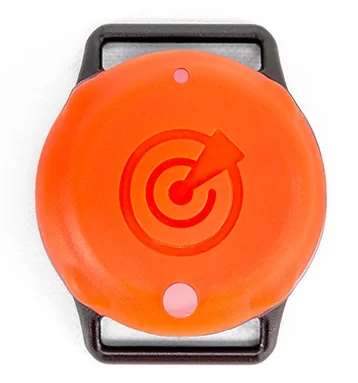
- ACR EXPOSURE OLAS TAG — wireless alarm, 500 hours
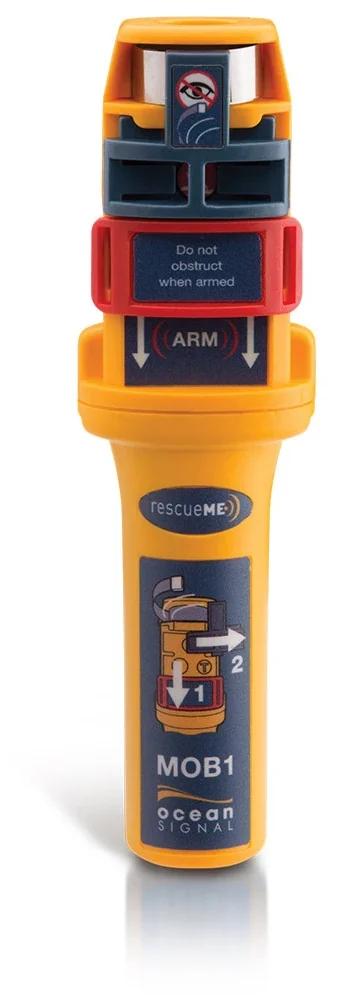
- Ocean Signal rescueME MOB1 — AIS
- Ocean Signal rescueME MOB2 — AIS
- Ocean Signal safeSEA M200 — AIS
AIS man-overboard beacons
Worn on the life jacket, an AIS MOB beacon transmits the wearer's position as an AIS target. Your own chartplotter shows it — so you can steer back — and so do nearby boats. Some also send a DSC alert to your VHF. Range depends on antenna height, typically a few nautical miles to other vessels.
Building layers of protection
No single device covers every man-overboard scenario. Crews that sail offshore usually combine prevention, an alarm on the boat, a way to find the person in the water, and a way to get them back aboard.
| Layer | What it does | Examples |
|---|---|---|
| Prevention | Keeps people on board | Jacklines, tethers, harnesses, a wearable inflatable PFD |
| Alarm and engine cut-off | Alerts the crew and stops the boat | Wireless crew alarms, engine cut-off switch links |
| Locating | Shows where the person is | AIS MOB beacons on the plotter, DSC alerts, lights |
| Recovery | Gets them back aboard | Throwable devices, a recovery sling, a boarding ladder |
Choosing for your boat
- Solo or short-handed powerboating: a wireless engine cut-off and crew alarm first; it stops the boat leaving you behind.
- Coastal sailing with crew: AIS MOB beacons on each lifejacket, so the plotter shows the casualty's position.
- Offshore: AIS MOB beacons plus a personal locator beacon for each crew member, jacklines and tethers, and a practiced recovery drill.
An AIS MOB beacon alerts nearby AIS receivers, including your own boat, but not rescue satellites; a personal locator beacon alerts search and rescue through the satellite system. Many offshore crews carry both.
Products referenced in this guide
Questions readers ask
What is the best man overboard device?
What is the difference between an AIS MOB beacon and a PLB?
Do I have to use an engine cut-off switch?
How do I practice a man overboard recovery?
Sources
- ACR — ACR AISLink MOB — product page and specifications Retrieved 25 Sep 2026
- ACR — ACR EXPOSURE OLAS GUARDIAN — product page and specifications Retrieved 25 Sep 2026
- ACR — ACR EXPOSURE OLAS TAG — product page and specifications Retrieved 25 Sep 2026
- Ocean Signal — Ocean Signal rescueME MOB1 — product page and specifications Retrieved 25 Sep 2026